 Research Article
 Trends and Impact of Educational Research in Web of Science Categories of Nursing: A Bibliometric Analysis
by Maria Christidis1,2*, Yuh-Shan Ho3
1Department of Neurobiology, Care Sciences and Society, Karolinska Institutet, SE-14183, Huddinge, Sweden
2Department of Nursing Science, Sophiahemmet University, SE-11486, Stockholm, Sweden
3CT HO Trend, 3F.-7, No. 1, Fuxing N. Rd., Songshan Dist., Taipei City 105611, Taiwan
*Corresponding author: Maria Christidis, Karolinska Institutet, Department of Neurobiology, Care Sciences and Society SE-14183, Huddinge, Sweden
Received Date: 09 February 2026
Accepted Date: 18 February, 2026
Published Date: 23 February, 2026
Citation: Christidis M and Ho YS (2026) Trends and Impact of Educational Research in Web of Science Categories of Nursing: A Bibliometric Analysis. Int J Nurs Health Care Res 9:1698. DOI: https://doi.org/10.29011/2688-9501.101698
Abstract
Background: Educational research is central to developing nursing curricula that support safe, evidence-informed, and competence-based practice. However, it remains unclear which topics and publications have had sustained influence over time and which are currently shaping the field. This study mapped long-term and contemporary citation impact in educational research within Web of Science nursing categories. Methods: A bibliometric analysis was performed using the Science Citation Index Expanded in the Web of Science Core Collection. Publications from 1991 to 2024 were retrieved using education-related search terms and filtered by presence in titles, abstracts, and author keywords. The dataset comprised 40,225 research articles. Citation impact was assessed using total citations accumulated through 2024 and citations received in 2024 to contrast historical influence with current visibility. Publication trends, journal distribution, and thematic development were examined using standard bibliometric indicators and keyword co-occurrence analysis. Results: The analysis showed a clear divergence between historically influential publications and those with the highest current visibility. Only two articles ranked among the top ten both by total citations through 2024 and by citations in 2024. Topics demonstrating sustained and/or renewed influence included quality and safety education, simulation-based learning, evidence-based practice competencies, and pandemic-related educational challenges. Overall publication volume increased substantially over time, particularly after the early 2000s, reflecting growing scholarly attention to educational strategies and workforce preparedness in nursing. Conclusions: Citation influence in nursing education research appears to be strongest for work addressing core competencies, evidence-informed teaching approaches, and educational adaptation during major global health challenges. Identifying publications with enduring and contemporary impact can help educators, researchers, and policymakers align future research and curriculum development with evolving clinical and societal demands.
Keywords: Nursing Education; Bibliometrics; Evidence-based Nursing Education; Competency based Nursing Education; Simulation; Pedagogical Adaptation
Introduction
Historically, nursing education has undergone significant global transformations in response to changes in healthcare systems, rapid technological advancements, and evolving societal needs and economic demands [1]. This development has led to a shift from vocational training, that is, a primarily practice-based training in a clinical context, to academic education within higher education institutions, where nursing has been redefined as a scientifically grounded discipline [2-6]. As a result, the professional foundation of nursing has evolved to require not only clinical competence, but also critical thinking skills, leadership capabilities, and engagement in research [4, 7]. One significant area of development within this academic transition is the integration of Evidence-Based Practice (EBP) into nursing curricula. EBP is defined as the careful integration of the best available evidence with clinical expertise and patient preferences, supporting informed clinical decision-making and forming the foundation for high-quality, effective, and ethical care [8-9]. Within the educational context, EBP fosters students' ability to critically appraise evidence, apply research findings in clinical situations, and contribute to the ongoing advancement of nursing knowledge. As healthcare systems grow increasingly complex, embedding EBP in nursing education ensures that future nurses are equipped to address contemporary challenges in a scientifically grounded and person-centered manner [10].
To effectively prepare students for the multifaceted demands of clinical practice and to foster life-long learning, nursing education adopts a diverse range of pedagogical approaches that support both theoretical understanding and the development of practical skills. Central to this is a student-centered educational philosophy, which emphasizes active participation and critical engagement [11, 1]. Pedagogical methods aligned with this approach include, but are not limited to, problem-based learning (PBL), team-based learning (TBL), case-based learning (CBL), simulation-based training, clinical placements, interprofessional education (IPE), and, increasingly, online and blended learning environments [12-15]. Each of these formats plays a distinct role in cultivating contemporary core nursing competencies such as critical and ethical reasoning, clinical judgment, effective communication, collaboration, and the integration of evidence into practice [16-17]. For instance, simulation-based training provides a safe and controlled setting in which students can develop clinical and decision-making skills, while clinical placements offer opportunities for experiential learning, professional socialization, and reflective practice under supervision [18-19]. Also, interprofessional education, fosters communication and teamwork across disciplines, which are essential qualities in modern, team-based care delivery [20]. while online and blended learning have expanded accessibility and flexibility, allowing students to engage in self-directed learning and accommodate diverse educational needs [21].
As nursing education continues to advance toward evidence-based and student-centered learning, understanding trends in educational research becomes essential for shaping the future direction of the nursing profession [22, 6, 23]. A bibliometric analysis can shed light on how research aligns with the evolving demands of healthcare, which are insights that are important not only for refining nursing education, but also for ensuring that future nurses are prepared to deliver safe, ethical, and effective care in increasingly complex clinical environments. Ultimately, a clearer overview of the field is needed to support strategic educational and research planning. Nursing education research has expanded substantially, yet it remains unclear which publications have provided enduring foundations for curriculum and competency development and which are currently shaping the field. Most overviews emphasise either long-term citation accumulation or recent visibility, but rarely contrast the two in a way that is useful for educational decision-making. By mapping education-related nursing research over three decades and comparing long-term influence with current citation visibility, this study clarifies what has remained central, what is resurging, and what may be emerging, that is information that can support educators, researchers, and policymakers in prioritising future educational development.
Against this background, the aim of this study was to comprehensively map education-related research in Web of Science nursing categories from 1991 to 2024, using a front-page approach (title, abstract, and author keywords), and to distinguish enduring foundational work from current agenda-setting publications by comparing total citations through 2024 (TC2024) with citations received in 2024 (C2024). Thematic trends were examined using author keywords, Keywords Plus [24], and abstracts [25].
Methods
Data for this research was gathered on 10 May 2025, through the retrieval of information from the online databases of the Science Citation Index Expanded (SCI-EXPANDED). It indexes 9,471 journals with citation references across 178 Web of Science categories in SCI-EXPANDED in 2023. A total of 126 journals indexed in category of nursing. To refine the search strategy for bibliometric studies using the Topic (TS) field in the Web of Science Core Collection (WoSCC), the “front page” filter, consisting of title, abstract, and author keywords, was introduced in 2011 [26-27]. In early 2021, the application of TI, AB, and AK as the primary “front page” methodology was presented [28]. It was recommended to use TI, AB, and AK as a filter in bibliometric studies using the Web of Science core Collection when search keywords are single words but not phrases [29]. This method significantly reduces irrelevant records by focusing on the most informative parts of each publication. In education-related research, this filter has revealed notable discrepancies: a 4.0% deviation in dental education research [30], a 5.0% deviation in literacy within education [31], a 18% deviation in virtual reality research in education [32].
Quotation marks (“ ”) and Boolean operator “OR” were used which ensured the appearance of at least one search keyword in the terms of TI (title), AB (abstract), or AK (author keywords) from 1991 to 2024 in Web of Science category of nursing. The primary search keywords used were: “education,” “educational,” “educators,” “educated,” “educating,” “educate,” and “educator.” To enhance the accuracy and comprehensiveness of the analysis, additional related terms were also considered [33]. Including: Less commonly used terms [34] “educative,” “educationalists,” “educationally,” “educations,” “educates,” and “educationalist,”Non-English term: educativo (Portuguese) Misspelled terms [33] “educationl” and “educaton.”
These supplementary terms were published within the SCI-EXPANDED database to ensure that all relevant records were captured, thereby minimizing the impact of keyword variations and typographical errors. A total of 49,665 documents, including 49,107 documents (99% of 49,665 documents), containing search keywords in the “front page” were retrieved in the SCI-EXPANDED database published between 1991 and 2024. Complete records, including annual citation counts, were downloaded into Microsoft 365 Excel for further analysis. As previously outlined by our research group [35,36], manual coding was performed to enhance data accuracy and interpretability. Journal impact factors (IF2023) were obtained from the 2024 edition of the Journal Citation Reports (JCR). In the WoSCC, the reprint author is designated as the corresponding author; however, we adopted the more universally understood term “corresponding author” [37]. For articles with a single author, institution, or country, the same entity was designated as both the first and corresponding author or affiliation [35]. In cases involving multiple corresponding authors, all were considered in the analysis. When affiliation names were absent and only addresses were listed, these were manually verified and updated to reflect the correct institutions [35].
Affiliations from England, Scotland, Northern Ireland (North Ireland), Wales, and Turks and Caicos Islands (Turks & Caicos) were reclassified under the United Kingdom (UK). Similarly, affiliations listed as Turkiye [38]. were reassigned to Turkey, while Greenland [39] and Faroe Islands [40] were reassigned to Denmark.
The evaluation of publications in this study was conducted using three citation indicators
- Cyear: This indicator represents the number of citations received from the WoSCC in a specific year (e.g., C2024 denotes the citation count for the year 2024) as proposed by Ho in the year 2012 [41].
- TCyear: This indicator reflects the total number of citations received from the WoSCC from the year of publication until the end of the most recent year (2024 in this study; denoted as TC2024), as introduced by Wang et al. in the year 2011 [42].
- CPPyear: The average number of citations per publication, calculated as CPP2024 = TC2024/TP, where TP denotes the total number of publications. This measure was suggested by Ho in the year 2013 [43].
Citation metrics can be applied across a wide range of categories, including total and annual publications, as well as distributions by document type, language, Web of Science category, journal, country, institution, and individual articles.
To assess research output more comprehensively, six publication indicators were introduced in 2014 to evaluate the performance of countries and institutions [44,45].
These Indicators are
- TP: Total number of articles published.
- IP: Number of articles published by a single country (IPC) or institution (IPI).
- CP: Number of internationally collaborative articles (CPC) or inter-institutionally collaborative articles (CPI).
- FP: Number of first-author articles.
- RP: Number of corresponding-author articles.
- SP: Number of single-author articles.
Moreover, six citation indicators (CPP2024) corresponding to these publication indicators were used to evaluate the impact of publications on document types, journals, countries and institutions, as proposed by Ho and Mukul in 2021 [46].
Results and Discussion
The results map education-related research within Web of Science nursing categories from 1991 to 2024, showing both substantial growth in publication output and shifts in thematic emphasis over time. Patterns of influence differ depending on whether impact is assessed through long-term citation accumulation (TC2024) or contemporary citation visibility (C2024). The central finding is that historical influence and contemporary visibility only partly overlap, suggesting that publications shaping the field over decades are not always those receiving the greatest attention in a given year. To clarify these dynamics, we first describe publication and citation patterns, followed by geographical and journal distributions, and then examine thematic trends using author keywords, Keywords Plus, and abstracts. Finally, we discuss implications for educators, researchers, and quality/safety stakeholders
Characteristics of Document Types and Languages
To examine document type characteristics within a specific research field, two fundamental metrics have been proposed: the average number of citations per publication (CPPyear) and the average number of authors per publication (APP) [47]. From 1991 to 2024, a total of 49,107 publications related to education in Web of Science category of nursing were indexed in the SCI-EXPANDED database, encompassing 19 distinct document types (Table 1). Among these, 40,225 were categorized as articles, representing 82% of all publications, with an average of 4.0 authors per publication. Reviews (3,764 documents) demonstrated the highest CPP2024, averaging 24 citations per publication (TC2024 = 89,713 citations), which was 1.7 times higher than that of articles. This pattern is like virtual reality in the education field, the review-to-article CPPyear ratio was 1.6 [32]. Similarly, Saudi Arabia’s research in the education-related categories reached a review-to-article CPPyear ratio of 1.5 [48]. However, the review-to-article CPPyear ratio was 2.9 in Turkey in the education-related field [49].
Documents in the WoSCC may be assigned multiple document types. For instance, 261 early accesses, 184 proceedings papers, and 12 retracted publications were also classified as articles. Consequently, the cumulative percentages in Table 1 exceed 100% [50].
|
Document type |
TP |
% |
TP* |
AU |
APP |
TC2024 |
CPP2024 |
|
Article |
40,225 |
82 |
40,225 |
1,59,480 |
4 |
5,74,631 |
14 |
|
Review |
3,764 |
7.7 |
3,764 |
14,743 |
3.9 |
89,713 |
24 |
|
Meeting Abstract |
2,609 |
5.3 |
2,606 |
7,105 |
2.7 |
186 |
0.071 |
|
Editorial Material |
2,051 |
4.2 |
1,981 |
3,983 |
2 |
8,767 |
4.3 |
|
Early Access |
306 |
0.62 |
306 |
1,494 |
4.9 |
241 |
0.79 |
|
Letter |
185 |
0.38 |
183 |
375 |
2 |
116 |
0.63 |
|
Proceedings paper |
184 |
0.37 |
184 |
533 |
2.9 |
3,438 |
19 |
|
News item |
93 |
0.19 |
40 |
54 |
1.4 |
37 |
0.4 |
|
Book review |
74 |
0.15 |
73 |
82 |
1.1 |
7 |
0.095 |
|
Correction |
70 |
0.14 |
67 |
221 |
3.3 |
37 |
0.53 |
|
Reprint |
24 |
0.049 |
24 |
78 |
3.3 |
298 |
12 |
|
Retracted publication |
12 |
0.024 |
12 |
53 |
4.4 |
119 |
10 |
|
Biographical-item |
4 |
0.0081 |
4 |
5 |
1.3 |
15 |
3.8 |
Discussion |
2 |
0.0041 |
2 |
2 |
1 |
23 |
12 |
|
Meeting |
2 |
0.0041 |
0 |
0 |
N/A |
0 |
0 |
|
Note |
2 |
0.0041 |
2 |
3 |
1.5 |
17 |
8.5 |
|
Bibliography |
1 |
0.002 |
1 |
3 |
3 |
2 |
2 |
|
Item withdrawal |
1 |
0.002 |
1 |
2 |
2 |
2 |
2 |
|
Withdrawn publication |
1 |
0.002 |
1 |
2 |
2 |
2 |
2 |
|
TP: number of publications; TP*: number of publications with author information; AU: number of authors; APP: average number of authors per publication; TC2023: the total number of citations from Web of Science Core Collection since publication year until the end of 2023; CPP2023: average number of citations per publication (CPP2023 = TC2023/TP); N/A: not available. |
|||||||
Table 1: Citations and authors according to the document type.
Articles, which typically include structured sections such as introduction, methods, results, discussion, and conclusion, are considered the primary focus of bibliometric analyses in most fields [51]. In education research in category of nursing in SCI-EXPANDED, 40,225 articles were published in six languages. English was the dominant language, accounting for 39,423 articles (98% of all articles), followed distantly by Portuguese (338 articles), Korean (274), German (85), Italian (63), and Spanish (40). Additionally, one article was published in a bilingual format (English and Estonian) in the Journal of the American Association of Nurse Practitioners and the Public Health Nursing, respectively. Articles in non-English languages generally received fewer citations, with an average CPP2023 of 5.2 citations per publication, compared to 14 citations for English-language articles. They also had a slightly lower average number of authors (APP), with 3.6 authors per publication, compared to 4.0 for English-language articles.
Characteristics of Publication Outputs
To better understand the citation lifespan of research articles, Chuang et al. proposed in 2007 evaluating the relationship between the average number of citations per article in a given year and the article’s age, defined as the number of years since publication [52]. Figure 1 shows the relationship between the average number of citations per publication for each year and the article age since publication. In the field of education in the category of nursing, 40,225 articles received 14,779 citations in their publication year, yielding an average of 0.37 citations per publication (CPP0 = 0.37). Citation activity peaked in the fourth full year post-publication; the 27,902 articles that were published between 1991 and 2020 garnered 62,877 citations, resulting in a CPP4 of 2.3 citations per publication. Furthermore, the only 26 articles that were published in 1991 had the 33rd full year 548 citations with CPP33 of 0.15 citations.
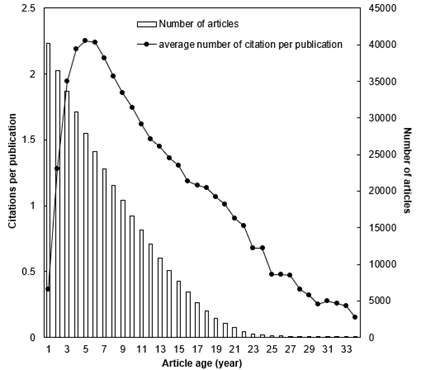
Figure 1: Number of citations per publication by article age.
To further assess long-term impact, the CPP2024 metric, representing the total number of citations from the year of publication through the end of 2024 per publication, was analyzed alongside annual publication counts (TP). As shown in Figure 2, a clear pattern emerges: articles typically reach citation maturity around 10 years after publication. A total of 3,701 articles were published in 2024 and received together 2,335 citations, resulting in a CPP2024 of 0.66 citations per publication. In contrast, 46 articles published in 2001 and accumulated 2,036 citations by 2024, producing a CPP2024 of 44. Similarly, research topics, for example, dengue [53], breast reconstruction [54], and wound dressing [55] were also required about 10 years to reach a citation plateau. This pattern suggests a universal citation lifecycle, where articles initially accumulate citations slowly, then peak as the research achieves widespread recognition, and finally plateaus, indicating sustained, albeit lower, citation activity.
Publication volume has also evolved. A significant rise was observed between 2002 and 2024, increasing from 100 articles to 3,701 articles annually. This trend reflects both the maturation and sustained interest in education research in the category of nursing in SCI-EXPANDED. Between 2002 and 2024, education research within the nursing category in SCI-EXPANDED experienced a significant growth trajectory in terms of publication volume and citation impact.
This notable increase, depicted in Figure 2, can be attributed to several interrelated factors. Firstly, the broader recognition of evidence-based practice in nursing education during the early 2000s likely spurred an increased volume of research output, as nursing programs globally sought to strengthen curricula through scientifically validated educational strategies [9]. Additionally, technological advancements, particularly the rise of digital learning platforms and simulation-based training, have transformed nursing education, prompting further research into these novel methodologies [56]. Moreover, the exponential increase in publication numbers may have been driven by global health challenges such as the COVID-19 pandemic, which underscored the need for robust, research-driven education strategies to maintain nursing workforce competencies under rapidly evolving circumstances [57]. Overall, the observed trends between 2002 and 2024 underscore a period of rapid evolution and intensified scholarly activity in nursing education research. These dynamics have not only elevated the quantity of research output but also its long-term scientific influence, reinforcing the vital role nursing education plays in healthcare improvement.
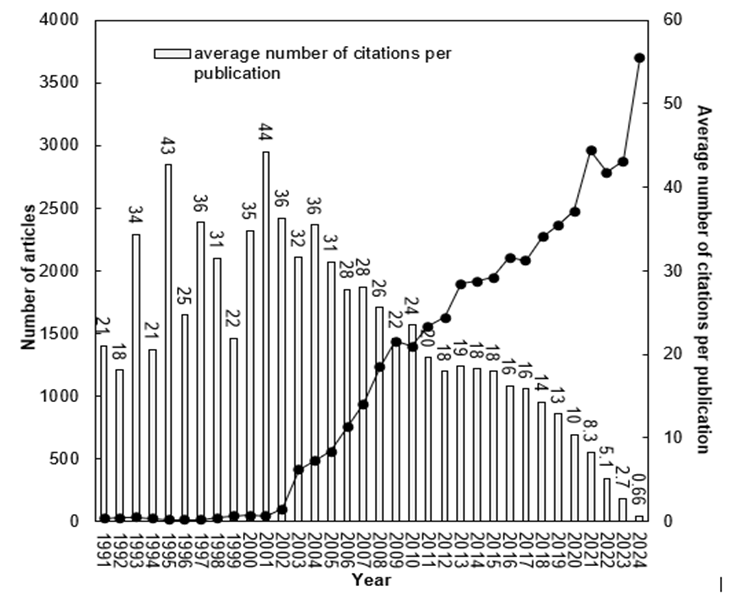
Figure 2: Number of education-related articles in category of nursing in SCI-EXPANDED and average number of citations per publication by year.
Journals
In 2021, Ho proposed indicators such as the average number of citations per publication (CPPyear) and the average number of authors per publication (APP) as baseline metrics to evaluate the characteristics of journals [58]. From 1991 to 2024, education-related research in nursing category was published in 135 journals within SCI-EXPANDED including eight journals that were not indexed in SCI-EXPANDED in 2023. Table 2 presents the 10 most productive journals publishing education-related articles in category of nursing in SCI-EXPANDED, along with their 2023 journal impact factor (IF2023), rank in the category, CPP2024, and APP. The Nurse Education Today (IF2023 = 3.6) ranked 9th in 126 journals in category of nursing, emerged as the most prolific journal, contributing 3,099 articles, accounting for 7.7% of the total 40,225 articles on education in Web of Science category of nursing in SCI-EXPANDED. Among the journals listed in Table 2, the Journal of Advanced Nursing (IF2023 = 3.8) demonstrated the highest CPP2024, with a CPP2024 of 27 citations per publication. In contrast, the BMC Nursing (IF2023 = 3.1) published 929 articles but had a lower average citation impact of 5.8 citations per publication. Authorship trends also varied across journals: BMC Nursing had the highest APP (5.1 authors per publication), while the Journal of Nursing Education had the lowest (2.9 authors per publication). Regarding journal impact factor, the top three journals in category of nursing in SCI-EXPANDED were International Journal of Nursing Studies (IF2023 = 7.5), Intensive and Critical Care Nursing (IF2023 = 4.9), and Women and Birth (IF2023 = 4.4), published 519, 122, and 304 articles respectively.
|
Journal |
TP (%) |
IF2023 (R) |
APP |
CPP2024 |
|
Nurse Education Today |
3,099 (7.7) |
3.6 (9) |
3.9 |
20 |
|
Journal of Clinical Nursing |
1,804 (4.5) |
3.2 (14) |
4.1 |
22 |
|
Journal of Nursing Education |
1,468 (3.6) |
1.6 (73) |
2.9 |
14 |
|
Nurse Education in Practice |
1,445 (3.6) |
3.3 (13) |
4 |
11 |
|
Journal of Advanced Nursing |
1,396 (3.5) |
3.8 (6) |
4.2 |
27 |
|
Journal of Professional Nursing |
1,098 (2.7) |
2.8 (19) |
3.7 |
14 |
|
BMC Nursing |
929 (2.3) |
3.1 (15) |
5.1 |
6 |
|
Nurse Educator |
814 (2.0) |
2.4 (32) |
3.4 |
9 |
|
Journal of Continuing Education in Nursing |
796 (2.0) |
1.1 (105) |
3.2 |
9 |
|
Midwifery |
695 (1.7) |
2.6 (24) |
4.2 |
17 |
|
TP: total number of articles; %: percentage of articles in all articles; IF2023: journal impact factor in 2023; R: rank in Web of Science category of nursing in SCI-EXPANDED; APP: average number of authors per publication; CPP2024: average number of per publication (TC2024/TP). |
||||
Table 2: The top 10 most productive journals.
Publication Performances: Countries and Institutions
It is widely recognized that the first author and the corresponding author are typically regarded as the primary contributors to a research article [59]. At the institutional level, the affiliation of the corresponding author often represents the origin or home base of the study [41]. Within the SCI-EXPANDED database, 145 out of 40,225 education-related articles (0.36%) lacked affiliation information. The remaining 40,080 articles were authored by researchers affiliated with institutions in 159 countries. Of these, 34,263 (85%) were single-country publications originating from 91 countries and had an average of 14 citations per publication (CPP2024). The remaining 5,817 articles (15%) were internationally collaborative publications involving 159 countries and demonstrated a slightly higher citation impact, with a CPP2024 of 15 citations per publication. These results highlight the small positive impact of international collaboration on the citation of educational research in category of nursing in SCI-EXPANDED. To compare research contributions across countries, six publication indicators and their corresponding citation indicators (CPP2024) were applied, as proposed by Ho and Mukul in 2021 [46]. Table 3 presents data for the top 10 most productive countries, each with over 1,000 publications, including four from Asia, three from the America, two European countries, and one from Oceania. South Africa was identified as the most productive country in Africa (227 articles; ranked 28th).
The USA Dominated in all six Publication Indicators
- Total Publications (TP): 17,820 articles (44% of 40,080 articles)
- Independent Publications (IPC): 15,597 articles (46% of 34,263 single-country articles)
- Collaborative Publications (CPC): 2,223 articles (38% of 5,817 internationally collaborative articles)
- First-Author Publications (FP): 16,414 articles (41% of 40,080 first-author articles)
- Corresponding-Author Publications (RP): 16,499 articles (41% of 40,067 corresponding-author articles)
- Single-Author Publications (SP): 2,937 articles (66% of 4,462 single-author articles).
Compared to the top 10 most productive countries in Table 3, the UK with a TP of 3,093 articles, an IPC of 1,869 articles, an FP of 2,205 articles, and an RP of 2,199 articles recorded the highest CPP2024 of 20, 21, and 21 citations per publication for total articles, single-country articles, first-author articles, and corresponding-author articles respectively. Sweden with a CPC of 457 articles had the highest CPP2024 of 19 citations per publication for internationally collaborative articles. Canada with an SP of 208 articles had the highest CPP2024 of 22 citations per publication for single-author articles. Figure 3 illustrates the development trends of the top five most productive countries with over 2,000 articles. The long-standing dominance of the USA in educational research within nursing, as observed in the SCI-EXPANDED database, can primarily be attributed to several factors. Historically, the United States has maintained robust infrastructure for research funding, comprehensive institutional support, and substantial resources allocated towards health sciences and nursing education [60].
This sustained investment has created a stable environment that consistently produces high-quality research output. Additionally, numerous prestigious nursing education programs-like the UCLA School of Nursing and the Indiana University School of Nursing-and influential scholarly journals-like the American Journal of Nursing and the Journal of Nursing Scholarship-are headquartered in the USA which contribute significantly to the high visibility and impact of American research (AACN, 2023). In contrast, the sharp increase in research productivity from China in recent years reflects strategic governmental initiatives aimed at rapidly developing higher education and research capabilities, especially in health sciences [61]. The Chinese government has significantly boosted funding and provided incentives for international collaborations, aligning with broader objectives of scientific excellence and global influence [61-62]. These targeted investments and supportive policies, and various international partnership programs, have rapidly propelled China into a leading position in terms of publication volume and global research presence [63]. The marked increase in international collaborative research, from countries such as China and Sweden, is also noteworthy, as reflected by their higher CPP2024 metrics. This highlights the positive impact of cross-border research initiatives, enhancing citation impact through increased global visibility and the exchange of diverse scientific insights [30-31].
Specifically, Sweden’s focused investment in international research partnerships has contributed to its strong performance in citation metrics for collaborative publications [64]. Overall, the results depicted in Table 3 and Figure 3 underline how institutional support, governmental strategies, and international collaboration collectively shape the landscape of educational research within nursing. These dynamics explain both the sustained research leadership of the USA and the swift emergence of China as a research powerhouse in recent years.
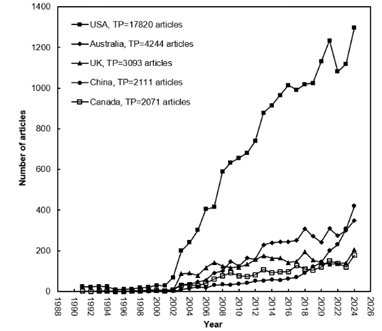
Figure 3: Development trends of the top five productive countries with more than 2,000 articles.
|
Country |
TP |
TP (n = 40,080) |
IPC (n = 34,263) |
CPC (n = 5,817) |
FP (n = 40,080) |
RP (n = 40,067) |
SP (n = 4,462) |
||||||
|
R (%) |
CPP2024 |
R (%) |
CPP2024 |
R (%) |
CPP2024 |
R (%) |
CPP2024 |
R (%) |
CPP2024 |
R (%) |
CPP2024 |
||
|
USA |
17820 |
1 (44) |
14 |
1 (46) |
14 |
1 (38) |
15 |
1 (41) |
14 |
1 (41) |
14 |
1 (66) |
13 |
|
Australia |
4244 |
2 (11) |
16 |
2 (8.6) |
16 |
2 (22) |
16 |
2 (8.8) |
16 |
2 (8.9) |
16 |
4 (3.4) |
21 |
|
UK |
3093 |
3 (7.7) |
20 |
3 (5.5) |
21 |
3 (21) |
18 |
3 (5.5) |
21 |
3 (5.5) |
21 |
2 (9.2) |
21 |
|
China |
2111 |
4 (5.3) |
13 |
6 (4.2) |
12 |
4 (12) |
15 |
4 (4.7) |
13 |
4 (4.6) |
13 |
12 (0.9) |
14 |
|
Canada |
2071 |
5 (5.2) |
18 |
7 (4.1) |
19 |
5 (11) |
16 |
6 (4.2) |
19 |
6 (4.2) |
19 |
3 (4.7) |
22 |
|
Brazil |
1880 |
6 (4.7) |
6.9 |
4 (4.6) |
6.8 |
9 (5.3) |
7.6 |
5 (4.4) |
6.9 |
5 (4.4) |
6.8 |
17 (0.36) |
6.4 |
|
South Korea |
1658 |
7 (4.1) |
11 |
8 (3.9) |
10 |
7 (5.8) |
15 |
8 (3.8) |
11 |
7 (3.9) |
11 |
5 (2.7) |
11 |
|
Turkey |
1619 |
8 (4.0) |
12 |
5 (4.3) |
12 |
29 (2.2) |
10 |
7 (3.9) |
12 |
8 (3.9) |
12 |
6 (1.8) |
16 |
|
Sweden |
1106 |
9 (2.8) |
20 |
10 (1.9) |
20 |
6 (7.9) |
19 |
10 (2.1) |
20 |
10 (2.1) |
20 |
14 (0.67) |
21 |
|
Taiwan |
1082 |
10 (2.7) |
15 |
9 (2.3) |
15 |
11 (5.1) |
15 |
9 (2.5) |
15 |
9 (2.5) |
15 |
8 (1.1) |
20 |
|
TP: number of total articles; TP R (%): total number of articles and the percentage of total articles; IPC R (%): rank and percentage of single-country articles in all single-country articles; CPC R (%): rank and percentage of internationally collaborative articles in all internationally collaborative articles; FP R (%): rank and the percentage of first-author articles in all first-author articles; RP R (%): rank and the percentage of corresponding-author articles in all corresponding-author articles; SP R (%): rank and the percentage of single-author articles in all single-author articles; CPP2024: average number of citations per publication (CPP2024 = TC2024/TP); N/A: not available. |
|||||||||||||
Table 3: Top 10 productive countries with more than 1,000 articles.
Of the 40,080 education-related articles in nursing category with affiliation information in the SCI-EXPANDED database, 14,449 (36%) were published by single institutions, achieving an average of 15 citations per publication (CPP2024). The remaining 25,631 articles (64%) involved inter-institutional collaboration and recorded a slightly lower CPP2024 of 14 citations per publication. These findings suggest that, unlike international collaboration, institutional collaboration was associated with a modest decrease in citation impact within education research in nursing category in SCI-EXPANDED. Table 4: presents the publication characteristics of the 10 most productive institutions in the field. Among these, the United States were represented by seven institutions followed by Australia with two while Brazil contributed one.
The University of São Paulo (Brazil) led five of the six Publication Indicators:
- Total Publications (TP): 679 articles (1.7% of 40,080 articles),
- Independent Publications (IPI): 180 articles (1.2% of 14,449 inter-institutionally collaborative articles),
- Collaborative Publications (CPI): 499 articles (1.9% of 25,631 inter-institutionally collaborative articles),
- First-Author Publications (FP): 379 articles (0.95% of 40,080 first-author articles),
- Corresponding-Author Publications (RP): 390 articles (1.0% of 40,008 corresponding-author articles).
- The University of Pennsylvania (USA) led in Single-Author Publications (SP) with 36 articles (0.81% of 4,462 single-author articles).
Compared to the top 10 most productive institutions in Table 4, the University of Pennsylvania (USA) with a TP of 421 articles, a CPI of 348 articles, an FP of 195 articles, and an RP of 202 articles dominated citations had the highest CPP2024 of 24, 24, 21, and 21 citations per publication for total articles, inter-institutionally collaborative articles, first-author articles, and corresponding-author articles respectively. The Griffith University (Australia) with an IPI of 57 articles and an SP of five articles had the highest CPP2024 of 24 and 33 citations per publication for single-institution articles and single-author articles respectively. These findings indicate that the University of São Paulo (Brazil) contributed the most education-related articles in nursing category. However, the articles have lower impactful and visible research in the education in category of nursing in SCI-EXPANDED. The University of São Paulo has demonstrated considerable productivity in terms of publication volume within nursing education research, yet the relatively lower citation impact observed requires closer analysis. Several factors may explain this discrepancy. Firstly, differences in the citation impact can stem from research visibility and dissemination channels. Studies indicate that research originating from institutions in non-English-speaking countries often encounter barriers in global visibility and citation rates, partly due to language constraints and reduced accessibility in widely circulated English-language journals [65].
|
Institution |
TP |
TP (n = 40,080) |
IPI (n = 14,449) |
CPI (n = 25,631) |
FP (n = 40,080) |
RP (n = 40,008) |
SP (n = 4,462) |
||||||
|
R (%) |
CPP2024 |
R (%) |
CPP2024 |
R (%) |
CPP2024 |
R (%) |
R (%) |
CPP2024 |
R (%) |
CPP2024 |
R (%) |
||
|
Univ São Paul |
679 |
1 (1.7) |
7.5 |
1 (1.2) |
8.6 |
1 (1.9) |
7.1 |
1 (0.95) |
8.2 |
1 (1.0) |
8 |
150 (0.13) |
7.2 |
|
Monash Univ |
488 |
2 (1.2) |
16 |
2 (0.68) |
18 |
2 (1.5) |
15 |
2 (0.61) |
16 |
2 (0.63) |
16 |
189 (0.11) |
3.2 |
|
Duke Univ |
440 |
3 (1.1) |
12 |
12 (0.48) |
14 |
3 (1.4) |
12 |
4 (0.54) |
12 |
4 (0.55) |
12 |
6 (0.65) |
16 |
|
UNC |
437 |
4 (1.1) |
20 |
2 (0.68) |
16 |
6 (1.3) |
22 |
3 (0.55) |
21 |
3 (0.56) |
21 |
3 (0.69) |
13 |
|
Univ Penn |
421 |
5 (1.1) |
24 |
11 (0.51) |
22 |
4 (1.4) |
24 |
6 (0.49) |
21 |
6 (0.50) |
21 |
1 (0.81) |
22 |
|
Griffith Univ |
400 |
6 (1.0) |
17 |
20 (0.39) |
24 |
5 (1.3) |
16 |
7 (0.48) |
19 |
7 (0.50) |
19 |
189 (0.11) |
33 |
|
UCSF |
392 |
7 (1.0) |
20 |
21 (0.37) |
20 |
6 (1.3) |
20 |
10 (0.4) |
21 |
10 (0.41) |
21 |
22 (0.38) |
12 |
|
Univ Michigan |
375 |
8 (0.94) |
16 |
4 (0.64) |
15 |
9 (1.1) |
16 |
5 (0.51) |
16 |
5 (0.52) |
16 |
16 (0.43) |
9 |
|
Univ Illinois |
332 |
9 (0.83) |
13 |
10 (0.53) |
12 |
12 (1.0) |
13 |
9 (0.41) |
12 |
9 (0.42) |
12 |
15 (0.45) |
10 |
|
MNA |
330 |
10 (0.82) |
13 |
7 (0.57) |
14 |
14 (1.0) |
13 |
8 (0.42) |
13 |
8 (0.44) |
12 |
28 (0.34) |
11 |
|
TP: total number of articles; TP R (%): total number of articles and percentage of total articles; IPI R (%): rank and percentage of single-institution articles in all single-institution articles; CPI R (%): rank and percentage of inter-institutionally collaborative articles in all inter-institutionally collaborative articles; FP R (%): rank and percentage of first-author articles in all first-author articles; RP R (%): rank and percentage of corresponding-author articles in all corresponding-author articles; SP R (%): rank and the percentage of single-author articles in all single-author articles; CPP2024: average number of citations per publication (CPP2024 = TC2024/TP); N/A: not available. |
|||||||||||||
Table 4: Top 10 most productive institutions.
Univ São Paulo: University of São Paulo, Brazil; Monash Univ: Monash University, Australia; Duke Univ: Duke University, USA; UNC: University of North Carolina, USA; Univ Penn: University of Pennsylvania, USA; Griffith Univ: Griffith University, Australia; UCSF: University of California, San Francisco, USA; Univ Michigan: University of Michigan, USA; MNA: Montana Nurses Assoc, USA
Given that English-language articles generally receive higher citation rates, the language of publication and the choice of journals could significantly influence citation performance [66]. Secondly, the thematic focus and the relevance of research topics to a broader international audience substantially influence citation metrics. Research addressing highly localized issues or topics primarily relevant within the national or regional contexts might not achieve extensive global citations compared to more universally applicable research [67]. Thus, if University of São Paulo’s research efforts predominantly focus on region-specific educational concerns or policy-oriented studies tailored to the Brazilian context, international citation potential may inherently be limited. Additionally, institutional collaboration, while extensive at University of São Paulo, may predominantly be within regional or national networks rather than international ones. International collaborations typically enhance visibility and citation impact by facilitating broader dissemination of research findings across diverse scientific communities and increasing the likelihood of publications in internationally recognized, high-impact journals [31,64]. To increase the citation impact of University of São Paulo’s nursing education research, strategies could include enhancing English-language proficiency, promoting publication in widely recognized international journals, and fostering more extensive global research collaborations. These efforts could effectively bridge the gap between publication volume and citation impact, thereby raising the university's profile in the global research community.
Citation Histories of the Ten Most Frequently Cited Articles
As citation counts in the WoSCC are continually updated, the total number of citations from the publication year to the most recent year (TCyear) was used in this analysis, following recommendations by [42], to mitigate potential temporal biases and ensure a more comprehensive assessment [42]. Of the 40,225 education-related articles in nursing category indexed in SCI-EXPANDED, 7,979 (20% of 40,225 articles) contained search keywords in their titles; 36,473 (91% of the 39,887 articles with abstracts) in their abstracts; and 12,955 (38% of the 33,874 articles with author keywords) in their author keywords. In total, 16,186 articles (40% of 40,225 articles) included search keywords in either their title or author keywords, thereby indicating a direct relevance to the field of education research in nursing category in SCI-EXPANDED. Despite this, analysis of the top 10 most frequently cited education articles in nursing category in SCI-EXPANDED revealed that only one included search keywords in its title, and none in their author keywords. In contrast, ten of these ten articles featured search keywords in their abstracts.
This discrepancy highlights the importance of abstracts for search visibility in bibliometric studies, even though article titles, often the first and sometimes the only part of a paper that readers encounter, play a critical role in capturing interest and communicating the central theme of the research [68]. Author keywords, on the other hand, reflect the authors’ intended thematic focus and are not constrained by standardized vocabularies [69]. Articles that include search keywords in their titles or author keywords are generally more directly aligned with the field of education research in nursing category in SCI-EXPANDED. Figure 4 illustrates the citation trajectories of the ten most cited articles in this group. Citation patterns for highly cited publications can vary significantly over time [70]. For instance, the article titled “Effectiveness of intermediate-fidelity simulation training technology in undergraduate nursing education” by Alinier et al. (2006) had a TC2024 of 239 citations, ranking 8th among articles with keywords in their title or author keywords [71]. However, its citation rate has declined, with only 4 citations in 2024 (C2024), placing it 1710th in annual citations that year. In contrast, a recent publication titled “Nursing education in a pandemic: Academic challenges in response to COVID-19” by Dewart et al. (2020) has experienced a sharply rising citation trend after publication, recording 76 citations in 2022 which was the highest annual citations in education research in nursing category [72].
Due to the topic COVID-19 was a special case, after the pandemic annual citations sharply decreased. The article by [73], "Quality and Safety Education for Nurses (QSEN)" demonstrates a distinctive citation trajectory illustrated in Figure 4. Initially receiving significant citations, its ongoing relevance highlights the critical role it has played in shaping nursing education, specifically focusing on quality and safety competencies [73]. The QSEN article directly responded to a national call for reform by the Institute of Medicine (IOM) [74], emphasizing competencies necessary for healthcare improvement, such as patient-centered care, teamwork, evidence-based practice, and informatics [73]. The sustained citation impact of the QSEN article can be attributed to several factors. Firstly, its conceptual framework closely aligns with continuous efforts to improve patient safety and care quality in healthcare systems, issues persistently highlighted as priorities by subsequent reports [74-75].
Secondly, the QSEN competencies have been widely integrated into nursing curricula globally, influencing teaching practices and accreditation standards significantly. This integration ensures ongoing citation relevance as new educational policies and practices reference foundational QSEN principles [76-77]. Moreover, the declining citation rate for some initially influential articles, such as the one on effectiveness of simulation training technology [71], contrasts sharply with the steady or renewed interest in topics driven by critical events like the COVID-19 pandemic [72].
Such events trigger intense scholarly activity around specific timely issues, leading to a surge in citations shortly after publication, often followed by a subsequent rapid decline once the event or immediate relevance passes [78]. Taken together, the QSEN article’s stable and sustained citation trajectory is thus indicative of foundational literature that continually influences policy, practice, and research within nursing education [73]. Its long-term relevance underscores how systemic educational transformations and curricular integration can produce enduring scholarly impacts. Table 5 lists the ten most frequently cited education articles that include search keywords in either the title or author keywords in nursing category in SCI-EXPANDED. The citation metric TC2024 was used to identify the most cited articles overall, while C2024 was used to determine the most currently impactful articles within the field. Only two of the top ten most frequently cited articles were also among the top ten most cited in 2024, suggesting that citation longevity and current relevance do not always align. These two articles, which demonstrate both enduring and recent influence, are highlighted below.
|
Rank |
Rank |
Title |
Country |
Reference |
|
(TC2024) |
(C2024) |
|||
|
1 (734) |
11 (29) |
Quality and safety education for nurses |
USA |
Cronenwett et al. (2007) |
|
2 (340) |
151 (13) |
The State of Evidence-Based Practice in US Nurses Critical Implications for Nurse Leaders and Educators |
USA |
Melnyk et al. (2012) |
|
3 (332) |
11 (29) |
Delineation of Self-Care and Associated Concepts |
USA |
Richard and Shea (2011) |
|
4 (306) |
8 (36) |
Effectiveness of patient simulation in nursing education: Meta-analysis |
South Korea |
Shin et al. (2015) |
|
5 (262) |
654 (7) |
Portfolios and assessment of competence: a review of the literature |
UK, Australia |
Mcmullan et al. (2003) |
|
6 (250) |
382 (9) |
A longitudinal cohort study of burnout and attrition in nursing students |
UK |
Deary et al. (2003) |
|
7 (249) |
11 (29) |
The ‘five rights’ of clinical reasoning: An educational model to enhance nursing students’ ability to identify and manage clinically ‘at risk’ patients |
Australia |
Levett-Jones et al. (2010) |
|
8 (239) |
1710 (4) |
Effectiveness of intermediate-fidelity simulation training technology in undergraduate nursing education |
UK |
Alinier et al. (2006) |
|
9 (238) |
3 (44) |
Nursing education in a pandemic: Academic challenges in response to COVID-19 |
Canada |
Dewart et al. (2020) |
|
10 (234) |
151 (13) |
Staff-student relationships and their impact on nursing students’ belongingness and learning |
Australia, UK |
Levett-Jones et al. (2009) |
|
TC2024: total number of citations from WoSCC since publication year to the end of 2024; C2024: number of citations of an article in 2024 only. |
||||
Table 5: Top ten most frequently cited education articles with search keywords in their title or author keywords published in category of nursing in SCI-EXPANDED.
Effectiveness of patient simulation in nursing education: Meta-analysis [79].
The article is published by three authors from South Korea with a TC2024 of 306 citations (rank 4th) and a C2024 of 36 citations (rank 8th). This meta-analysis provides a rigorous synthesis of evidence regarding the effectiveness of simulation-based education in nursing. Drawing on 20 studies and yielding 68 effect sizes, the study demonstrates a medium-to-large overall effect (SMD = 0.71) of simulation compared to traditional teaching or no intervention. Notably, the highest effect sizes were observed in performance-based evaluations and in the development of psychomotor and affective learning domains, that are skills essential for competent clinical nursing practice.
The subgroup analysis further revealed that simulation was particularly effective for graduate students and senior undergraduates, especially in clinical settings using high- and medium-fidelity simulators. The study also found that effect sizes were highest when simulations targeted complex clinical decision-making and real-world nursing scenarios. The unique trajectory of this article, that is a steep initial rise in citations following its publication in 2015 followed by sustained and even increasing citations through 2024, is illustrated in Figure 4. This pattern suggests not only initial academic interest but also growing integration into nursing education research, curricula, and systematic reviews. The consistent annual citation rate reflects its status as a foundational reference in both evidence-based pedagogy and simulation methodology. The importance and visibility of this article in nursing education can be attributed to several factors. First, it addresses a persistent gap in literature by quantifying the impact of simulation across diverse learning environments and evaluation strategies, which has been previously highlighted by [80-81].
Second, it offers empirical justification for using high- and medium-fidelity simulation technologies, which have become increasingly accessible in nursing programs globally. From a pedagogical standpoint, the findings from this study support the competency-based education movement in nursing, aligning with recommendations from key works such as Gaberson and Oermann and Cook, who advocate for learning strategies that build clinical judgment, confidence, and technical proficiency [82-83]. Simulation, as validated by this meta-analysis, enables safe and repeatable practice, promotes reflective learning through debriefing, and enhances students' preparedness for real-world care scenarios, which are core priorities in contemporary nursing education. Moreover, this article’s integration of Kirkpatrick’s four levels of evaluation (reaction, learning, behavior, results) into nursing-specific metrics represents a methodological advancement, bridging education theory with nursing outcomes assessment [84]. In conclusion, this meta-analysis has become a cornerstone in nursing education research. Its consistent citation growth (as visualized in Figure 4) reflects both its enduring relevance and increasing utility in an evolving educational landscape marked by digital innovation and the need for practice-based learning. The study not only legitimizes simulation as an evidence-based teaching strategy but also informs best-practices for educators designing simulation-rich curricula aimed at producing clinically competent and confident nursing professionals
Nursing education in a pandemic
Academic challenges in response to COVID-19 [72]. The article is published by four authors from the Athabasca University in Canada with a TC2024 of 238 citations (rank 9th) and a C2024 of 44 citations (rank 3rd). This article offers one of the earliest and most widely cited reflections on the academic challenges faced by nursing educators and students during the COVID-19 pandemic. Based on firsthand experiences from a Canadian post-licensure Bachelor of Nursing program, the article provides timely documentation of the ethical, logistical, and pedagogical dilemmas encountered as clinical placements were abruptly suspended in response to public health risks. The authors highlight the difficult balance between educational continuity and student safety. Many students in the program, already practicing as Licensed Practical Nurses, were simultaneously managing frontline responsibilities and academic progression. As COVID-19 cases escalated, the institution removed students from in-person clinical settings, prompting widespread anxiety about delayed graduation, licensure, and long-term career implications. The narrative underscores students’ willingness to assume personal risk to complete their training. This fact raises vital questions about the role of universities during crises, the ethical weight of academic decisions, and the evolving expectations of nursing students in emergency contexts. Figure 4, which visualizes citation trends over time, reveals a steady increase in citations from 2020 onward, peaking again in 2024 as pandemic-era educational reforms continue to be evaluated. This sustained visibility reflects not only the article’s timely publication during the early days of the pandemic but also its continued relevance in ongoing discussions about resilience, equity, and emergency preparedness in nursing education. The significance of this article in nursing education stems from its early articulation of structural challenges that would later affect institutions worldwide. how to adapt clinical instruction in a digital space, how to support students emotionally and academically under extreme conditions, and how to maintain academic integrity while responding to shifting public health demands. It also raises broader issues such as academic guilt among nurse educators, ethical concerns regarding accelerated training, and the long-term sustainability of nursing programs when educators may be called back to frontline care. In 2024, the article remains highly visible because it provides a foundational lens for understanding pandemic pedagogy, which is nowadays a term used to describe the principles and adaptations in health professions education during COVID-19. Therefore, this article can often be cited in meta-analyses, national policy reports, and nursing education frameworks exploring the impact of COVID-19 on licensure pathways, student mental health, and clinical competency. Moreover, the article exemplifies best practice in academic reflexivity: drawing on real-time faculty and student feedback, situating decision-making in ethical frameworks, and fostering transparent communication during unprecedented disruption. In doing so, it aligns with broader recommendations in the literature advocating compassionate leadership, trauma-informed pedagogy, and flexible academic policy during global crises [85-87].
In summary, this article is not only a historical snapshot of nursing education under crisis but also a guiding document for future health education responses. As shown in Figure 4, its enduring citation trajectory reflects its central place in the literature on nursing education resilience, ethics, and leadership in times of uncertainty.
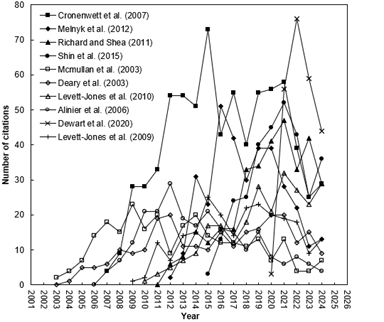
Figure 4: Citation histories of the top ten most frequently cited articles containing search keywords on their title or author keywords.
There are also some more articles that must be raised in this analysis. These are among the top cited publications and the most cited during the recent year, i.e. those demonstrating both historical and current citation significance, and are identified as "important contributed articles" and provide valuable insights into trends shaping nursing education research. In addition to the previously highlighted studies by [72,79], several other articles emerge as highly impactful. For instance, [73] have significantly influenced the integration of quality and safety competencies into nursing curricula. Their seminal "Quality and Safety Education for Nurses (QSEN)" article maintains consistent citations due to its foundational role in defining competencies essential for contemporary nursing education. Additionally, Melnyk et al. have contributed crucial insights on the state of evidence-based practice (EBP) among nurses in the United States, addressing vital implications for nurse educators and leaders [88]. Their work continues to resonate due to ongoing emphasis on EBP as a cornerstone of nursing education. Lastly, Levett-Jones et al. presented an educational model focused on clinical reasoning, known as the "five rights", that remains highly relevant due to its effectiveness in teaching students to manage clinical risks [89]. These articles represent enduring scholarly contributions that have significantly shaped pedagogical practices, curriculum development, and educational standards in nursing.
Implications
For educators and curriculum leaders, the enduring prominence of competency- and safety-oriented publications suggests that curricular development benefits from explicitly anchoring learning outcomes, assessment, and faculty development to frameworks that repeatedly structure the field (e.g., quality and safety competencies, evidence-based practice, and clinical reasoning). For researchers, the divergence between TC2024 and C2024 indicates that topic selection and study design should consider both long-term contribution and current relevance; areas with sustained citation patterns may represent stable knowledge cores, whereas topics that surge in annual citations may signal emerging needs that warrant rigorous evaluation and theory-informed research programmes. For policymakers and quality/safety stakeholders, the citation visibility of work linked to workforce preparedness and system-level challenges (including educational adaptation during crises) reinforces the importance of supporting educational infrastructure that can respond rapidly while preserving competence standards and patient safety priorities. Across these audiences, contrasting legacy influence with contemporary visibility provides a pragmatic way to prioritise educational investments while keeping pace with changing clinical and societal demands.
Conclusion
By mapping education-related research in Web of Science nursing categories (1991–2024), this study demonstrates that long-term impact (TC2024) and contemporary citation visibility (C2024) provide complementary and only partly overlapping pictures of influence. The field’s enduring core is shaped by publications that have repeatedly informed competency-oriented education, particularly work linked to quality and safety, evidence-based practice, clinical reasoning, and simulation-based learning. In contrast, contemporary visibility highlights how attention can shift toward pressing educational challenges, including rapid adaptation of teaching and learning during system-wide disruptions such as the COVID-19 pandemic. Using these two lenses together can help educators, researchers, and stakeholders align curriculum development and research priorities with both foundational competencies and emerging needs.
Disclosures and statements
Ethical approval statement
Ethics approval statement is not applicable
Patient Consent Statement
Not applicable since no patients are included and no patient data is reported
Conflict of Interest Disclosure
The authors declare that they have no conflicts of interest.
Data Availability Statement
Data generated and/or analyzed during the current study are freely available at the Web of Science and also available from the corresponding author on reasonable request.
Funding statement
No funding was received for this research.
Artificial intelligence
No generative artificial intelligence has been used in any part of the analysis or writing.
Authors' contributions
YH and MC contributed to the conceptualization, and methodology. YH contributed to data collection, data curation, and formal data analysis. YH and MC contributed to interpretation. MC wrote the original draft, while YH reviewed the manuscript. Finally, both authors read and revised the manuscript prior to submission.
References
- Pagnucci N, Carnevale FA, Bagnasco A, Tolotti, A, Cadorin L, et al. (2015) A cross-sectional study of pedagogical strategies in nursing education: opportunities and constraints toward using effective pedagogy. BMC Medical Education. 15: 138.
- Andersson EP (1999) From vocational training to academic education: The situation of the schools of nursing in Sweden. In 38: 33-38.
- Egenes KJ (2017) History of nursing. Issues and trends in nursing. 2nd ed. Burlington, MA (USA): Jones & Bartlett Learning 3-28.
- Heyman I (1995) Gånge hatt till...: omvårdnadsforskningens framväxt i Sverige-sjuksköterskors avhandlingar 1974-1991. Daidalos.
- Kapborg I (1998) Nursing education in Sweden: development from vocational training to higher level education. Journal of Advanced Nursing. 27: 372-378.
- Schekel M (2009) Nursing education: Past, present, future. In G. Roux & J. Halstead (Eds.), Issues and trends in nursing (27-55). Jones & Bartlett.
- Stievano A, Caruso R, Pittella F, Shaffer F, Rocco G, et al. (2019) Shaping nursing profession regulation through history–a systematic review. International nursing review. 66: 17-29.
- Mackey A, Bassendowski S (2017) The history of evidence-based practice in nursing education and practice. Journal of professional nursing. 33: 51-55.
- Stevens KR (2013) The impact of evidence-based practice in nursing and the next big ideas. Online journal of issues in nursing. 18: 4
- Melnyk BM, Gallagher‐Ford L, Long LE, Fineout‐Overholt E (2014) The establishment of evidence‐based practice competencies for practicing registered nurses and advanced practice nurses in real‐world clinical settings: Proficiencies to improve healthcare quality, reliability, patient outcomes, and costs. Worldviews on Evidence‐Based Nursing. 11: 5-15.
- Kantor SA (2010) Pedagogical change in nursing education: One instructor’s experience. Journal of Nursing Education. 49: 414-417.
- Alberti S, Motta P, Ferri P, Bonetti L (2021) The effectiveness of team-based learning in nursing education: a systematic review. Nurse Education Today. 97: 104721.
- Berg E, Lepp M (2023) The meaning and application of student-centered learning in nursing education: An integrative review of the literature. Nurse education in practice. 69: 103622.
- Ehrenberg AC, Häggblom M (2007) Problem-based learning in clinical nursing education: Integrating theory and practice. Nurse education in practice. 7: 67-74.
- Forsgren S, Christensen T, & Hedemalm A (2014) Evaluation of the case method in nursing education. Nurse education in practice. 14: 164-169.
- Horsfall J, Cleary M, Hunt GE (2012) Developing a pedagogy for nursing teaching–learning. Nurse Education Today. 32: 930-933.
- Ironside PM (2006) Using narrative pedagogy: learning and practising interpretive thinking. Journal of advanced nursing. 55: 478-486.
- Jeffries PR, Clochesy J (2013) Clinical simulation: An experiential, student-centered pedagogical approach. Teaching in nursing. A guide for faculty 4: 352-368.
- Reilly A, Spratt C (2007) The perceptions of undergraduate student nurses of high-fidelity simulation-based learning: A case report from the University of Tasmania. Nurse Education Today. 27: 542-550.
- Barnsteiner JH, Disch JM, Hall L, Mayer D, Moore SM (2007) Promoting interprofessional education. Nursing outlook. 55: 144-150.
- Leidl DM, Ritchie, Moslemi N (2020) Blended learning in undergraduate nursing education–A scoping review. Nurse Education Today. 86: 104318.
- Lindeman CA (2000) The future of nursing education. Journal of Nursing Educatio 39: 5-12.
- Valiga TM (2012. Nursing education trends: future implications and predictions. The Nursing Clinics of North America. 47: 423-434.
- Jia Y, Chen Y, Yan P, Huang Q (2021) Bibliometric analysis on global research trends of airborne microorganisms in recent ten years (2011–2020). Aerosol and Air Quality Research. 21: 200497.
- Zhang G, Xi S, HO Y-S (2010). A bibliometric analysis of world volatile organic compounds research trends. Scientometrics. 83: 477-492.
- Fu H-Z, Wang M-H, Ho Y-S (2012) The most frequently cited adsorption research articles in the Science Citation Index (Expanded). Journal of Colloid and Interface Science. 379: 148-156.
- Wang MH, Ho Y-S (2011) Research articles and publication trends in environmental sciences from 1998 to 2009. Archives of Environmental Science 5: 1-10.
- Usma M, Ho Y-S (2021) COVID-19 and the emerging research trends in environmental studies: a bibliometric evaluation. Environmental Science and Pollution Research. 28: 16913-16924.
- Farooq M, Khan A, El-Adawy H, Melzer F, Neubauer H, et al. (2024) A bibliometric analysis of brucellosis research (1991–2022): Research trends and hotspots. South African Journal of Animal Science. 54: 397-418.
- Ho Y-S, Al-Moraissi EA, Christidis N, Christidis M (2025) Evolving trends in dental education: a bibliometric analysis of research outputs, challenges and innovations (1991–2023). Cogent Education. 12: 2453259.
- Ho Y-S, Al-Moraissi EA, Christidis N, Christidis M (2023) Research focuses and trends in literacy within education: A bibliometric analysis. Cogent Education. 11: 2287922.
- Elaish MM, Yadegaridehkordi E, Ho Y-S (2024) Publication performance and trends in virtual reality research in education fields: a bibliometric analysis. Multimedia Tools and Applications. 84: 6999-7026.
- Ezugwu AE, Oyelade ON, Ikotun AM, Agushaka JO, Ho Y-S (2023) Machine learning research trends in Africa: a 30 years overview with bibliometric analysis review. Archives of Computational Methods in Engineering. 29: 1-31.
- Ho Y-S, Lwesya F (2024) Classic publications in food security research: A bibliometric analysis. World Food Policy. 10: 143-161.
- Ho Y-S, Tapolyai M, Cheungpasitporn W, Fülöp T (2023) A bibliometric analysis of publications in Renal Failure in the last three decades. Renal Failure. 45: 2241913.
- Li Z, Ho YS (2008) Use of citation per publication as an indicator to evaluate contingent valuation research. Scientometrics 75: 97-110.
- Chiu WT, Ho Y-S (2007) Bibliometric analysis of tsunami research. Scientometrics. 73: 3-17.
- Ho YS, Giordano V, Mauffrey C, Giannoudis PV (2024) Trends of impact factor contributors to the Injury Journal: A bibliometric analysis. Injury. 55: 111255.
- TchuifonTchuifon D, Fu HZ, Ho Y-S (2017) Cameroon publications in the science citation index expanded: bibliometric analysis. Revista de Biología Tropical. 65: 1582-1591.
- Ranasinghe P, Monge-Nájera J, Liyanage CK, Ho Y-S (2022) Half a century of Sri Lanka research: Subjects, researchers, institutions, journals and impact (1973-2019). Revista de Biología Tropical. 70: 40-52.
- Ho YS (2012) Top-cited articles in chemical engineering in Science Citation Index Expanded: A bibliometric analysis. Chinese Journal of Chemical Engineering. 20: 478-488.
- Wang MH, Fu HZ, Ho Y-S (2011) Comparison of universities' scientific performance using bibliometric indicators. Malaysian Journal of Library and Information Science. 16: 1-19.
- Ho Y-S (2013) The top-cited research works in the Science Citation Index Expanded. Scientometrics. 94: 1297-1312.
- Ho Y-S, Kahn M (2014) A bibliometric study of highly cited reviews in the S cience C itation I ndex expanded™. Journal of the Association for Information Science and Technology. 65: 372-385.
- Hsu YH, Ho Y-S (2014) Highly cited articles in health care sciences and services field in Science Citation Index Expanded. Methods of Information in Medicine. 53: 446-458.
- Ho Y-S, Mukul SA (2021) Publication performance and trends in mangrove forests: A bibliometric analysis. Sustainability. 13:12532.
- Monge-Nájera J, Ho Y-S (2017) El Salvador publications in the Science Citation Index Expanded: subjects, authorship, collaboration and citation patterns. Revista de Biología Tropical. 65: 1428-1436.
- Mohsen MA, Ho Y-S (2024) Thirty years of educational research in Saudi Arabia: a bibliometric study. Interactive Learning Environments. 32: 1763-1778.
- Maral M, Ho Y-S (2025) Educational Research in Türkiye: A Bibliometric Analysis of the Global Literature. Körpeoğlu Journal. 50: 237-263.
- Usman M, Ho Y-S (2020) A bibliometric study of the Fenton oxidation for soil and water remediation. Journal of Environmental Management. 270:110886.
- Ho Y-S, Satoh H, Lin S-Y (2010) Japanese lung cancer research trends and performance in Science Citation Index. Internal Medicine. 49: 2219-2228.
- Chuang K-Y, Huang Y-L, Ho Y-S (2007) A bibliometric and citation analysis of stroke-related research in Taiwan. Scientometrics. 72: 201-212.
- Ho Y-S, Siu E, Chuang K-Y (2016) A bibliometric analysis of dengue-related publications in the Science Citation Index Expanded. Future Virology. 11: 631-648.
- Li Y, Wang X, Thomsen JB, Nahabedian MY, Ishii N, et al. (2020) Research trends and performances of breast reconstruction: a bibliometric analysis. Annals of Translational Medicine. 8: 1529.
- Ho Y-S, Sharmin AA, Islam MT, Halim AF (2022) Future direction of wound dressing research: Evidence From the bibliometric analysis. Journal of Industrial Textiles. 52: 15280837221130518.
- Cant RP, Cooper SJ (2017) Use of simulation-based learning in undergraduate nurse education: An umbrella systematic review. Nurse Education Today. 49: 63-71.
- Swift A, Banks L, Baleswaran A, Cooke N, Little C, et al. (2020) COVID‐19 and student nurses: A view from England. Journal of clinical nursing. 29: 3111-3114
- Ho Y-S (2021) A bibliometric analysis of highly cited publications in Web of Science category of emergency medicine. Signa Vitae. 17: 11-19.
- Riesenberg D, Lundberg GD (1990) The order of authorship: who's on first? JAMA 264: 1857-1857.
- McHugh MD, Lake ET (2010) Understanding clinical expertise: nurse education, experience, and the hospital context. Research in nursing & health. 33: 276-287.
- Cai C, Xiong S, Millett C, Xu J, Tian M, et al. (2023) Health and health system impacts of China's comprehensive primary healthcare reforms: a systematic review. Health Policy Plan 38: 1064-1078.
- Fang Z, Lamers W, Costas R (2022) Studying the scientific mobility and international collaboration funded by the China Scholarship Council. arXiv preprint arXiv:2203.11779.
- Leggat SG, Liu C, Wu Q (2018) Sino-Australian University Partnership in Health Management Education. Front Public Health 6: 251.
- Zhu R, Wang Y, Wu R, Meng X, Han S,et al. (2020) Trends in high-impact papers in nursing research published from 2008 to 2018: A web of science-based bibliometric analysis. J Nurs Manag 28: 1041-1052.
- Amano T, González-Varo JP, Sutherland WJ (2016) Languages are still a major barrier to global science. PLoS biology. 14: e2000933.
- Di Bitetti MS, Ferreras JA (2017) Publish (in English) or perish: The effect on citation rate of using languages other than English in scientific publications. Ambio. 46: 121-127.
- Utrobičić A, Chaudhry N, Ghaffar A, Marušić A (2012) Bridging knowledge translation gap in health in developing countries: visibility, impact and publishing standards in journals from the Eastern Mediterranean. BMC Med Res Methodol 12.
- Roberts WC (1985) The article's title. The American Journal of Cardiology. 56: 210-212.
- Peset F, Garzón‐Farinós F, González L-M, García‐Massó X, Ferrer‐Sapena A, et al. (2020) Survival analysis of author keywords: An application to the library and information sciences area. Journal of the Association for Information Science and Technology. 71: 462-473.
- Ho Y-S (2014) A bibliometric analysis of highly cited articles in materials science. Current Science. 107:1565-1572.
- Alinier G, Hunt B, Gordon R, Harwood C (2006) Effectiveness of intermediate‐fidelity simulation training technology in undergraduate nursing education. Journal of advanced nursing. 54: 359-369.
- Dewart G, Corcoran L, Thirsk L, Petrovic K (2020) Nursing education in a pandemic: Academic challenges in response to COVID-19. Nurse Education Today. 92: 104471.
- Cronenwett L, Sherwood G, Barnsteiner J, Disch J, Johnson J, et al. (2007) Quality and safety education for nurses. Nursing outlook. 55: 122-131.
- Greiner AC, Knebel E (2003) A bridge to quality In: DC National Academy Press
- Institute of Medicine Committee on Quality of Health Care in, A. (2000). To Err is Human: Building a Safer Health System. National Academies Press (US)
- Altmiller G, Armstrong G (2017) 2017 National Quality and Safety Education for Nurses Faculty Survey Results. Nurse Educ 42.
- Cengiz A, Yoder LH (2020) Assessing Nursing Students' Perceptions of the QSEN Competencies: A Systematic Review of the Literature with Implications for Academic Programs. Worldviews Evid Based Nurs 17: 275-282.
- Ho Y-S (2014) Classic articles on social work field in Social Science Citation Index: a bibliometric analysis. Scientometrics. 98:137-155.
- Shin S, Park J-H, Kim J-H (2015) Effectiveness of patient simulation in nursing education: meta-analysis. Nurse Education Today. 35: 176-182.
- Norman J (2012) Systematic review of the literature on simulation in nursing education. Abnf Journal 23: 24-28.
- Weaver A (2011) High-fidelity patient simulationin nursing education: an integrative review. Nursing education perspectives. 32: 37-40.
- Cook DA, Hatala R, Brydges R, Zendejas B, Szostek JH, et al. (2011) Technology-enhanced simulation for health professions education: a systematic review and meta-analysis. JAMA 306:978-988.
- Kathleen B. Gaberson, Marilyn H, Oermann (2010) Clinical Teaching Strategies in Nursing. Third Edition. Springer Publishing Company.
- Kirkpatrick D, Kirkpatrick J (2006) Evaluating Training Programs: The Four Levels. Berrett-Koehler Publishers.
- Brouwer KR, Walmsley LA, Parrish EM, McCubbin AK, Welsh JD, et al. (2021) Examining the associations between self-care practices and psychological distress among nursing students during the COVID-19 pandemic. Nurse Education Today. 100:104864.
- Lederman D (2020) The shift to remote learning: The human element. Inside Higher Ed
- Morin KH (2020) Nursing education after COVID-19: Same or different? J Clin Nurs 29: 3117-3119.
- Melnyk BM, Fineout-Overholt E, Gallagher-Ford L, Kaplan L (2012) The state of evidence-based practice in US nurses: critical implications for nurse leaders and educators. JONA: The Journal of Nursing Administration. 42: 410-417.
- Levett‐Jones T, Lathlean J, Higgins I, McMillan M (2009) Staff–student relationships and their impact on nursing students’ belongingness and learning. Journal of advanced nursing. 65: 316-324.
- (2000) by the National Academy of Sciences. All rights reserved.
© by the Authors & Gavin Publishers. This is an Open Access Journal Article Published Under Attribution-Share Alike CC BY-SA: Creative Commons Attribution-Share Alike 4.0 International License. Read More About Open Access Policy.