 Review Article
 Thermal Submucosal Hemorrhoidopexy
by Francesco Sias1*, Luca Milone2
1Dr. Sias Medical Center, Cagliari, Italy
2Chief of General Surgery, The Brooklyn Hospital Center, NYC, NY, United States
*Corresponding author: Francesco Sias, Dr. Sias Medical Center, Cagliari, Italy
Received Date: 08 December 2025
Accepted Date: 16 December 2025
Published Date: 18 December 2025
Citation: Sias F, Milone L (2025) Thermal Submucosal Hemorrhoidopexy. J Surg 10:11513 https://doi.org/10.29011/2575-9760.011513
Introduction
Over the past two decades, surgical treatment for hemorrhoidal disease has evolved and moved towards the repositioning of hemorrhoidal cushions in their anatomical site, hemorrhoidopexy, over traditional hemorrhoidectomy, which involves their removal [1,2]. This shift aligns more closely with the physiological understanding of hemorrhoidal disease. Hemorrhoidal cushions are therefore integral to continence; they contribute to resting anal sphincter pressure, protect the muscle complex during defecation, and form a compressible layer that ensures complete closure of the anus. When these support structures fail and under defecation pressure the hemorrhoidal plexus prolapses below the pectinate line, it results in venous stasis, edema, and mucosal erosions—key components of the disease’s symptomatology. Thus, it is logical that surgical correction should focus on restoring the hemorrhoidal plexus to its proper anatomical position, rather than removing it. These repositioning techniques offer numerous advantages: improved postoperative pain and comfort, rapid return to daily activities, fewer and less severe complications (e.g., hemorrhage, stenosis, incontinence, pelvic infections). In the past this treatment was delivered using staplers or de-arterializing surgical techniques, this reduced the postoperative pain but continued to have a high recurrence rates. In the past we have contributed to the minimally invasive treatment of the hemorrhoid developing a special anoscope and creating a sutured hemorrhoidopexy with promising outcomes but the technical requirements of suturing in the narrow space had limited the expansion of this procedure [3]. We then developed a minimally invasive technique to treat hemorrhoids called Thermal Submucosal Hemorrhoidopexy (TSH) which painlessly repositions the hemorrhoids in their position restoring the normal anatomy. We herein present a series of 232 patients treated with TSH.
Methods
Between February 2016 and December 2022, a total of 248 patients (ages 22–78), 220 male and 128 female, with second-, 12%, and third-degree, 88%, hemorrhoids were treated using this technique. All the patients received Midazolam (2 mg); 35 received supplemental Propofol (30-40mg); 72 received local anesthesia with Lidocaine (2%, 10 ml). The average operative time was 10 minutes (5-15 minutes) and all patients discharged within 30-60 minutes from the surgery.
Technique
With The Patient in the Sims Position, left lateral decubitus, a light intravenous sedation with Midazolam is achieved; supplemented as needed with Propofol or local anesthesia for anoscope insertion discomfort. The operative anoscope is inserted with the windows aligned to the left lateral, anterior, and right posterior hemorrhoidal nodules. Once the mucosa is identified, within 1 cm from the pectinate line, the electrode is inserted into the submucosa and a low-intensity current is delivered for 5–10 seconds, until visible whitening and volume reduction are achieved. This is repeated above each of the hemorrhoid anatomical positions. Then the anoscope is rotated 180 degrees and the treatment is repeated for intermediate sites.
Results
All the patients were re-examined within 30 days of the operation showing remarkable results (Figures 1,2). Pain was absent or mild in the vast majority. Only 25 patients required analgesics for more than 2 days. In the first 5 post op days 92% reported no pain, with 8% reporting some level of pain, with the maximum VAS score reported of 4 out of 10. Most of the patients resumed work the same or next day. 38 cases (15.3%) experienced minor bleeding, no intervention needed, 5 cases (2%) experienced rehospitalization for bleeding requiring transfusion, occurred between postoperative days 1–8. We had 10 cases (4%) of hemorrhoidal thrombosis. At the 5 years follow-up, 216 patients (87%) completely asymptomatic, 32 patients (12.9%) had minor residual prolapse or proctorrhagia and underwent repeated localized treatment. Of note 5 of these 32 patients had prior surgeries for hemorrhoidal disease. Figure 1 shows a before surgery and Figure 2 shows immediately after surgery.
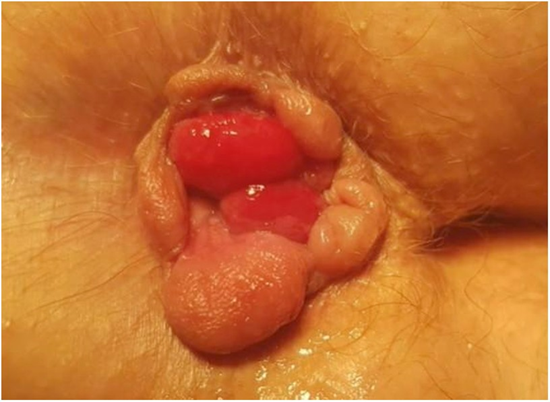
Figure 1: 3rd degree hemorrhoids before TSH.
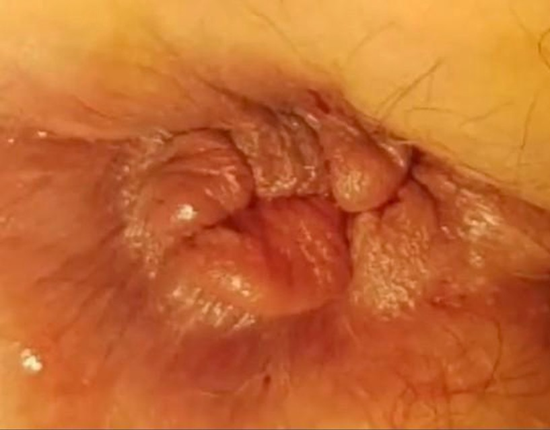
Figure 2: 3rd degree hemorrhoids after TSH.
Discussion
Excisional hemorrhoidectomy remains the gold-standard operative treatment for advanced (grade III–IV) and complicated hemorrhoidal disease because of its durability and low longterm recurrence; however, it carries a well-recognised spectrum of short- and long-term complications that significantly affect patient recovery and quality of life. The most frequently reported acute postoperative problems are severe pain, bleeding, urinary retention, and wound-related infection, while the most feared late complications include anal stenosis, fecal incontinence, persistent pain, and—rarely—pelvic sepsis. Prompt recognition and prevention of these outcomes are essential to optimise functional results and reduce readmissions [4]. TSH is a promising technique which allows the painless repositioning of the hemorrhoids in their original location avoiding the terrifying sequel of the classic hemorrhoidectomy. Post-operative pain is the dominant driver of early morbidity after hemorrhoidectomy and the single most important determinant of patient satisfaction and unplanned representation. Pain is multifactorial (wound size, sphincter spasm, thrombosis, and individual pain sensitivity) and peaks in the first 48–72 hours. Multiple trials and systematic reviews have evaluated pharmacologic (opioids, NSAIDs, gabapentinoids, topical agents) and procedural strategies (lateral internal sphincterotomy, less invasive excisional techniques) to reduce pain; while many interventions reduce analgesic requirements or pain scores modestly, no single approach uniformly eliminates severe early pain, so multimodal analgesia and patient counselling remain central to postoperative care [5]. Bleeding after TSH is minimal, 15% of the patients have experienced minor bleeding due to the dislodgment of the clot from the mucosa puncture site, major bleeding was experienced by only 2% of the patients and it happened at the beginning of the surgeon learning cure. Bleeding after excisional hemorrhoidectomy is common but usually minor and self-limited; clinically significant hemorrhage requiring reoperation or transfusion is uncommon but well described in the literature since the area of dissection is larger and attention needs to be taken care in ligating or properly cauterizing the arterial artery.
Reported early postoperative bleeding rates vary across series (typically single-digit percentages), and risk factors include advanced disease, anticoagulant use, and inadequate hemostasis at operation. Delayed bleeding can occur as eschar separates and should prompt prompt anoscopic assessment to distinguish superficial wound bleeding from a more serious arterial bleed or hematoma. [4] Urinary retention is another frequent early complication (reported ranges vary widely, often 2–20% depending on analgesia and perioperative protocols) and correlates with severe pain and use of systemic opioids. Early mobilisation, judicious opioid prescribing, and bladder scanning with timely catheterisation when indicated reduce sequelae and length of stay. We had no cases of urinary retention since the procedure is performed in a location that doesn’t have pain innervation. [4] Infectious complications and pelvic sepsis are uncommon after modern hemorrhoidectomy but can have catastrophic consequences when they occur, particularly after stapled procedures (stapled hemorrhoidopexy) or when intraperitoneal contamination or deep pelvic collection develops. Although the absolute risk is low, several case series and systematic reviews have highlighted rare but severe septic complications associated with stapled techniques—this has influenced technique selection and informed consent discussions. [6] TSH, opposite of stapled hemorrhoidopexy, is minimally invasive and achieves safer outcomes with neither infection complication nor other longterm adverse outcomes such as—anal stenosis, fecal urgency/ incontinence, and persistent or neuropathic perianal pain—are less common but more debilitating. Anal stenosis is most often related to overzealous mucocutaneous excision or circumferential resection and may present weeks to months postoperatively with obstructed defecation and outlet dysfunction. Fecal incontinence after hemorrhoidectomy is typically minor and transient but can be substantial when surgery damages the internal sphincter or in patients with pre-existing sphincter compromise; reported longterm incontinence rates vary between series and depend heavily on how continence is assessed and baseline patient factors. These potential outcomes argue for conservative tissue resection where possible, careful surgical technique, and preoperative assessment of continence for at-risk patients. [7]
Conclusions
Thermal Submucosal Hemorrhoidopexy is an effective, welltolerated, and minimally invasive technique with an immediate and long-lasting impact on symptoms. Patient discomfort is minimal, with almost no pain and minimal disruption to daily activities. Severe complications were rare; the most significant being five cases of postoperative bleeding requiring hospitalization. The technique is highly reproducible and safe, and should serious complications arise, they are likely to be manageable. Even if long-term recurrence rates are slightly higher compared to radical surgery, the low morbidity, quick recovery, and option for repeat minimally invasive treatments make this method a highly attractive alternative in the management of second- and thirddegree hemorrhoids.
References
- Burch J, Epstein D, Baba-Akbari A, Weatherly H, Fox D, et al. (2008) Stapled haemorrhoidectomy (haemorrhoidopexy) for the treatment of haemorrhoids: a systematic review and economic evaluation. Health Technol Assess 12: iii-iv, ix-x, 1-193.
- Sajid MS, Parampalli U, Whitehouse P, Sains P, McFall MR, et al. (2012) A systematic review comparing transanal haemorrhoidal dearterialisation to stapled haemorrhoidopexy in the management of haemorrhoidal disease. Tech Coloproctol 16: 1-8.
- Iachino C, Guerrero Y, Sias F, Milone L, Saccone M, et al. (2009) Resultados de la hemorroidopexia con sistema hemorpex en el tratamiento quirúrgico ambulatorio de las hemorroides [Hemorpex system: a new procedure for the treatment of haemorrhoids]. Cir Esp 86: 105-109.
- Kunitake H, Poylin V (2016) Complications Following Anorectal Surgery. Clin Colon Rectal Surg 29: 14-21.
- Lohsiriwat V, Jitmungngan R (2022) Strategies to Reduce PostHemorrhoidectomy Pain: A Systematic Review. Medicina 58: 418.
- Zhang G, Liang R, Wang J, Ke M, Chen Z, et al. (2020) Network metaanalysis of randomized controlled trials comparing the procedure for prolapse and hemorrhoids, Milligan-Morgan hemorrhoidectomy and tissue-selecting therapy stapler in the treatment of grade III and IV internal hemorrhoids(Meta-analysis). Int J Surg 74: 53-60.
- Kuiper SZ, Van Dam KAM, Kimman ML, Mitalas L, Koot PGM, et al. (2023) Picking Up the Threads: Long-Term Outcomes of the Sutured Haemorrhoidopexy: A Retrospective Single-Centre Cohort Study. Journal of Clinical Medicine 12: 391.
© by the Authors & Gavin Publishers. This is an Open Access Journal Article Published Under Attribution-Share Alike CC BY-SA: Creative Commons Attribution-Share Alike 4.0 International License. Read More About Open Access Policy.