 Research Article
 The Unseen Emergency: A New Blueprint for Heat Resilience in a Warming World
by Hala AlMossawi1, Neeraj Kak2*, Karim M AlZadawi3, A N M Al Imran4, Anil Kaul5
1Associate Professor, Oklahoma State University, USA
2Public Health Advisor, AQUITY Global Inc, USA
3Epidemiologist/Public Health Consultant, Associate Professor, Al-Manara University of Medical Sciences, Missan, Iraq
4Digital Health Advisor, Aquity Global Inc, Canada
5Vice Chancellor, Malla Reddy Vishwavidyapeeth, India
*Corresponding author: Neeraj Kak, Public Health Advisor, AQUITY Global Inc, USA
Received Date: 06 January, 2026
Accepted Date: 10 January, 2026
Published Date: 16 January, 2026
Citation: AlMossawi H, Kak N, AlZadawi KM, Imran ANM Al, Kaul, A (2026) The Unseen Emergency: A New Blueprint for Heat Resilience in a Warming World. J Community Med Public Health 10: 551. https://doi.org/10.29011/2577-2228.100551
Abstract
Background: The Escalating Global Heat Crisis.
Extreme heat is a rapidly intensifying global health and development challenge, currently contributing to approximately 500,000 deaths annually. While the threat is global, LMICs bear a disproportionate burden due to limited infrastructure, constrained health systems, and high levels of occupational exposure among informal workers. Currently, 30% of the global population experiences potentially lethal heat conditions for more than 20 days each year. Projections from the IPCC indicate that global temperatures are likely to rise by 1.5-2°C by mid-century, which will further exacerbate these risks and undermine social stability and economic productivity.
Methodology: Narrative Synthesis and Case Review.
The findings in this paper are based on a narrative synthesis of evidence from high-level sources, including peer-reviewed journals, global health reports, and documented heat action plans. Key data were drawn from the WHO, IPCC, UNICEF’s Children’s Climate Risk Index, and the ILO. To ensure practical relevance, the study reviewed successful case examples from India (Ahmedabad’s Heat Action Plan), Mexico (Cool Roof Program), and Kenya to illustrate how integrated strategies can be implemented in resourceconstrained settings.
Findings
Approximately 30% of the global population experiences potentially lethal heat conditions for more than 20 days annually. Children (1 billion in high-risk countries), women (4–5% increased risk of preterm birth per 1°C rise), informal workers (500 billion work hours lost annually), and urban poor face disproportionate risks. Digital interventions—such as heat-health early warning systems, mobile alerts, GIS mapping, and digital cash transfers—complement practical measures like cool roofs, green infrastructure, and labor protections. Case examples from India, Mexico, and Kenya demonstrate feasibility and impact.
Interpretation
Integrated strategies combining digital and non-digital solutions are essential to reduce heat-related morbidity, mortality, and socioeconomic losses. Governance frameworks must address gender and digital divides, mobilize climate financing, and embed heat adaptation into national policies.
Research in Context
Evidence before this study
Previous research has documented the health impacts of extreme heat and highlighted isolated interventions such as early warning systems or cooling infrastructure. However, few studies have proposed a comprehensive framework integrating digital and practical solutions tailored to LMICs.
Added value of this study
This paper synthesizes global evidence and case studies to propose a holistic approach that leverages technology alongside community-based measures. It emphasizes vulnerable populations, governance, and financing, offering actionable recommendations for policymakers.
Implications of all available evidence
Heat adaptation in LMICs requires urgent, multi-sectoral action.
Digital tools can amplify practical interventions, but equity considerations—particularly gender and digital access—must guide implementation. Climate financing and policy integration are critical for scalability.
Introduction
Extreme heat is increasingly recognized as a major climate and health challenge. According to WHO and The Lancet Countdown, heat contributes to nearly 500,000 deaths annually worldwide [1,2]. LMICs bear the greatest burden due to limited infrastructure, high exposure among informal workers, and constrained health systems. Approximately 30% of the global population experiences potentially lethal heat conditions for more than 20 days each year [3]. IPCC projections indicate that global temperatures will likely exceed 1.5-2°C by mid-century, intensifying heat-related risks [4].
Heat stress undermines health, productivity, and social stability. Vulnerable groups—including children, women, older adults, and the urban poor—face compounded risks due to biological, social, and economic factors. Despite these challenges, heat adaptation strategies remain fragmented, particularly in resource-constrained settings. This paper proposes an integrated framework combining digital and practical solutions to address rising heat risks in LMICs (Figure 1).
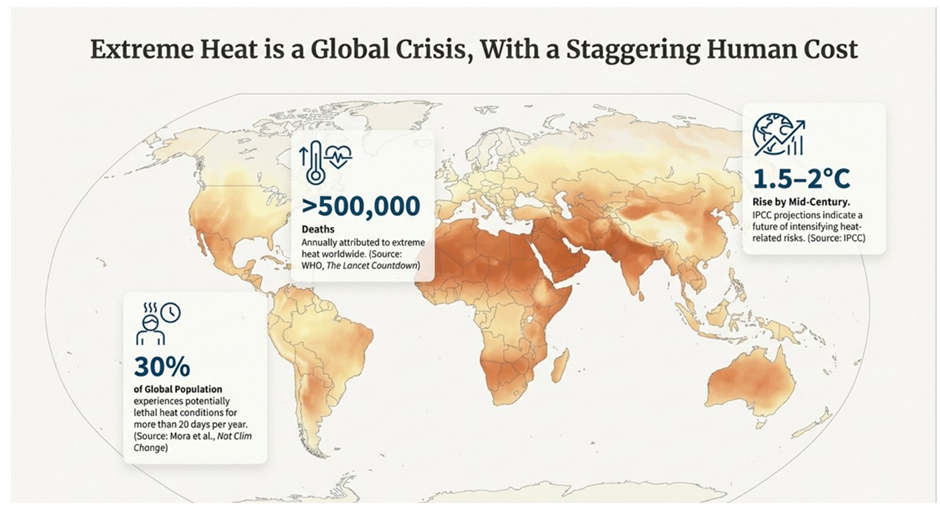
Figure 1: The Escalating Global Heat Crisis: Drivers of Mortality, Morbidity, and Socioeconomic Vulnerability
Methods
We conducted a narrative synthesis of evidence from peer-reviewed journals, global health reports, and documented heat action plans. Sources included WHO heat-health guidelines [1], IPCC climate projections [4], UNICEF’s Children’s Climate Risk Index [5], and ILO reports on labor productivity [6]. Case studies from India, Mexico, and Kenya were reviewed to illustrate feasibility and impact. Our conceptual framework emphasizes multi-sectoral interventions that integrate technology-driven tools with community-based measures.
Results
Vulnerable Populations and Heat Risks
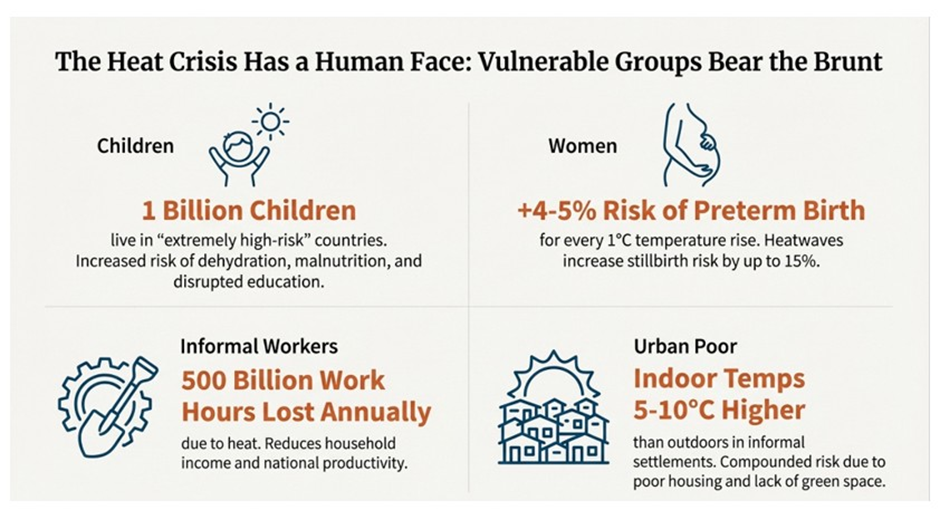
The sources categorize heat risk as a multidimensional threat that compounds existing biological, social, and economic vulnerabilities:
- Children: More than 1 billion children live in countries classified as “extremely high-risk”. Heat leads to higher rates of dehydration and malnutrition and causes significant disruptions to school [5].
- Maternal Health: Women face specific biological risks; every 1°C rise in temperature is associated with a 4–5% increase in preterm birth risk. Furthermore, heatwaves can increase the risk of stillbirth by as much as 15% [7].
- Informal Workers: This group loses 500 billion work hours annually due to heat stress. This loss directly impacts household income and national GDP, particularly in sectors where labor is primarily performed outdoors [6].
- The Urban Poor: Residents of informal settlements are particularly vulnerable because poor housing materials and a lack of vegetation can make indoor temperatures 5–10°C higher than outdoor temperatures [8] (Fig).
Proposed Interventions
Digital Solutions
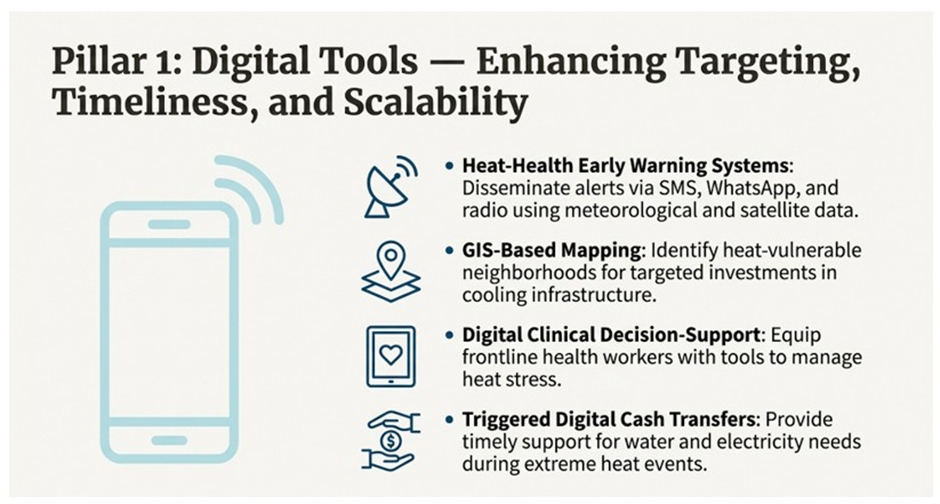
Digital tools are essential for improving the targeting, timeliness, and scalability of heat interventions:
- Early Warning and Communication: Systems utilizing SMS, WhatsApp, and radio alerts provide critical meteorological data to the public.
- Overcoming the Digital Divide: To reach populations with limited literacy or smartphone access, Interactive Voice Response (IVR) and pre-recorded messages in local languages are used. These tools allow recipients to listen to heat-protection guidance—such as hydration tips and symptom recognition at their convenience.
- Surveillance and Data: Integrating routine health information systems with environmental data allows for predictive analytics. This helps health officials detect spikes in healthcare utilization and mortality, enabling the “pre-positioning” of resources before a heat event peaks.
- Economic Support: Digital cash transfers can be automatically triggered by extreme heat events to help vulnerable families afford essential water and electricity (Figure 2).
Practical and Structural Solutions (Non-Digital Solutions)
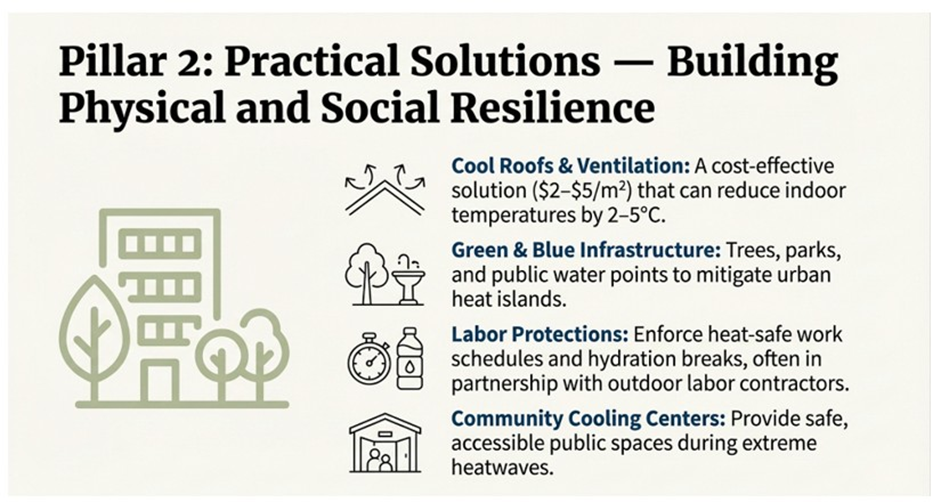
Physical resilience is built through community-based and structural adaptations that provide immediate cooling relief:
- Passive Cooling: Cool roofs are highly cost-effective, costing between 5 per square meter while reducing indoor temperatures by 2-5°C [9].
- Labor Protections: Partnerships with outdoor labor contractors are vital. These contractors act as intermediaries to enforce hydration breaks, adjust work schedules to cooler parts of the day, and disseminate safety guidance.
- Infrastructure: The development of “green and blue” infrastructure (trees, parks, and public water points) helps mitigate the urban heat island effect, while cooling centers offer safe havens during peak heatwaves (Figure 3).
Discussion
Digital tools amplify practical interventions by improving targeting, timeliness, and scalability. Strengthening heat and health surveillance through the integration of routine health information systems and environmental data can enhance early detection of heat-related health impacts. Leveraging existing platforms, such as district health information systems, enables timely identification of heat-associated increases in healthcare utilization and mortality. Predictive analytics applied to these data streams can support anticipatory public health actions during heat events, including pre-positioning of resources and targeted risk communication. Such approaches are particularly relevant in LMICs, where heat-related illnesses are often under-reported and surveillance infrastructure already exists but remains underutilized for climate-health preparedness. However, barriers such as gender and digital divides must be addressed. Governance frameworks should integrate heat action into national climate and health policies, supported by financing from mechanisms like the Green Climate Fund and World Bank adaptation programs [10]. Case examples—such as Ahmedabad’s Heat Action Plan and Mexico’s Cool Roof Program—demonstrate feasibility and impact [11,12].
We propose a comprehensive framework depicted in figure 2 which illustrates a holistic approach to mitigating heat-related health and socioeconomic risks in Low- and Middle-Income Countries (LMICs) by integrating four interdependent pillars: Digital Tools, Practical Solutions, Governance and Financing, and Equity and Inclusion. Effective heat risk communication requires approaches that are accessible to populations with limited literacy and digital access. Interactive voice response systems and pre-recorded messaging in local languages enable delivery of timely guidance on hydration, symptom recognition, and appropriate care-seeking during heat events. These modalities have demonstrated effectiveness in other public health domains and can complement text-based alerts by expanding reach to underserved communities. Incorporating culturally appropriate voice-based communication into national and local heat action plans may therefore strengthen behavioral adaptation and reduce heat-related health risks among vulnerable populations. At its core lies the Integrated Heat Adaptation Strategy, which aims to reduce morbidity, mortality, and productivity losses caused by extreme heat. Each pillar contributes unique strengths—digital tools enhance early warning systems, mobile alerts, GIS mapping, and digital cash transfers for rapid response; practical solutions provide physical resilience through cool roofs, green infrastructure, cooling centers, and labor protections; governance ensures policy integration, climate financing, and monitoring frameworks; and equity safeguards vulnerable populations by addressing gender disparities, closing the digital divide, and prioritizing informal workers and urban poor communities.
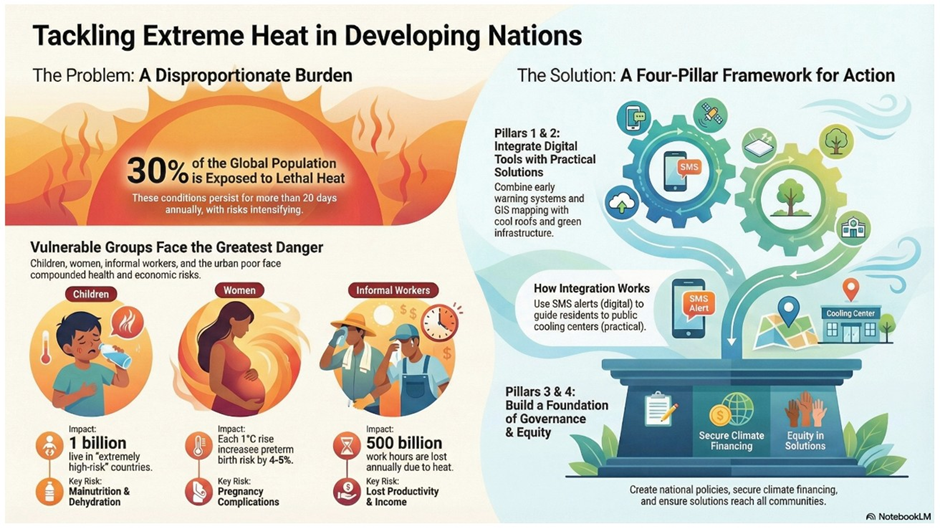
Figure 2: Mapping Heat Risks to Intervention: The Four-Pillar Strategy for Targeted Resilience.
The framework emphasizes synergy rather than isolated interventions. Digital innovations amplify the reach and efficiency of practical measures, while governance structures and financing mechanisms enable scalability and sustainability. Equity considerations permeate all components, ensuring that adaptation strategies are inclusive and socially just. Surrounding these pillars is an outer layer of global alignment with the Sustainable Development Goals (SDGs), the Paris Agreement, and climate resilience objectives, reinforcing the need for coordinated international action. This integrated model provides a roadmap for policymakers, development agencies, and local governments to design adaptive systems that are technologically advanced, contextually relevant, and equitable.
To effectively address the mounting risks posed by extreme heat in low- and middle-income countries, a coordinated policy approach is essential. Governments should prioritize the development of comprehensive national heat action plans that explicitly incorporate gender-sensitive strategies, ensuring that adaptation measures reach and empower all segments of society. Investment in robust digital infrastructure and inclusive communication channels is vital; such advancements will enable the timely dissemination of warnings and support targeted interventions for communities most at risk. Securing climate financing—drawing on sources such as the Green Climate Fund and international adaptation programs— is critical to scale and sustain heat adaptation efforts. Finally, establishing clear monitoring indicators, including metrics such as reductions in heat-related hospitalizations and expanded access to cooling infrastructure, will provide a foundation for measuring progress and refining strategies over time. These recommendations collectively support a holistic, integrated framework for heat adaptation, aligning national action with broader objectives of equity, resilience, and global climate goals.
As depicted in figure 3, our vision for an Integrated Heat Adaptation Framework rests on four interdependent pillars: Digital Tools, Practical Solutions, Governance and Financing, and Equity and Inclusion.
- Policy Integration: Heat adaptation must be mainstreamed into national climate and health policies through gendersensitive national heat action plans.
- Sustainable Finance: Implementation requires mobilizing climate financing from global entities like the Green Climate Fund and the World Bank.
- Monitoring and Evaluation: Governments must establish clear indicators of success, such as reductions in heat-related hospitalizations and expanded access to cooling infrastructure, to refine strategies over time.
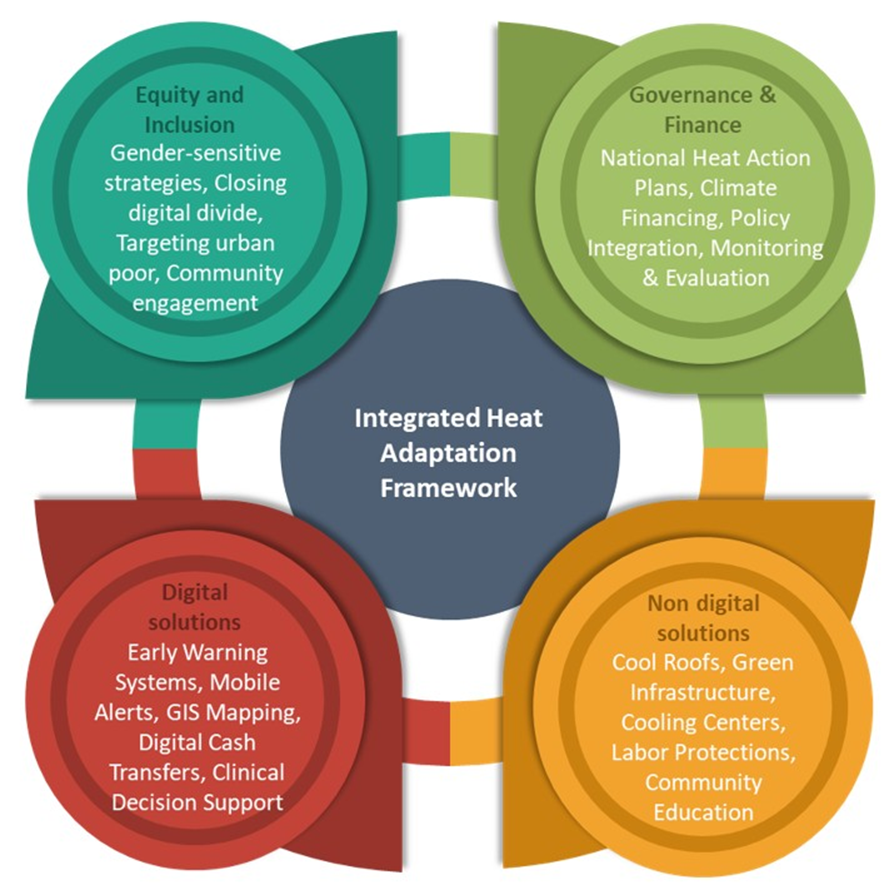
Figure 3: The Integrated Heat Adaptation Framework: A Conceptual Model for Holistic Policy and Global Alignment
Conclusion
Extreme heat poses a growing and multidimensional threat to health, economic development, and social well-being in LMICs. As climate change accelerates, these risks are projected to intensify, disproportionately impacting vulnerable populations and exacerbating existing inequalities. Addressing this challenge requires a paradigm shift from fragmented interventions toward a holistic strategy that synthesizes digital innovation, practical community-based measures, robust governance, sustainable financing, and a steadfast commitment to equity.
Collectively, these interventions highlight the importance of moving beyond standalone heat alerts toward integrated, contextappropriate strategies that combine digital tools, structural adaptations, and institutional response mechanisms. In LMIC settings, the greatest impact is likely to be achieved through bundled approaches that link early warning systems with occupational protection, passive cooling interventions, targeted behavior change communication and strengthened heat and health surveillance. Such integrated strategies align with global climate and health frameworks and provide a pragmatic pathway for reducing heat-related morbidity, mortality, and socioeconomic losses under conditions of increasing climate variability.
Addressing heat risks requires a paradigm shift from fragmented, standalone alerts toward bundled, multi-sectoral strategies. By aligning national adaptation efforts with the SDGs and the Paris Agreement, LMICs can foster international cooperation and shared accountability. This integrated approach ensures that heat adaptation is not only technologically advanced but also socially just and contextually relevant.
The integrated framework presented in this analysis underscores the necessity of leveraging the synergistic strengths of four interdependent pillars: digital tools, practical solutions, governance and financing, and equity and inclusion. Digital innovations—such as early warning systems, SMS alerts, GIS mapping, and digital cash transfers—offer significant potential to enhance the targeting, timeliness, and scalability of adaptation responses. When coupled with practical, contextually relevant measures, including cool roofs, green infrastructure, accessible cooling centers, and labor protections, these tools provide a foundation for building physical and social resilience at the community level.
Governance and financing mechanisms are indispensable for mainstreaming heat adaptation within national climate and health policies. The establishment of comprehensive, gender-sensitive national heat action plans, supported by dedicated climate finance from instruments like the Green Climate Fund and World Bank adaptation programs, is critical for ensuring the sustainability and reach of interventions. Equity considerations must permeate all aspects of policy design and implementation, with targeted efforts to bridge gender and digital divides, prioritize informal workers, and empower urban poor communities.
A coordinated policy approach is paramount. Governments, development agencies, and local authorities must invest in resilient digital and physical infrastructure, foster inclusive communication channels, and build institutional capacity for adaptive governance. The establishment of clear monitoring and evaluation frameworks—incorporating indicators such as reductions in heatrelated morbidity and mortality, and improved access to cooling infrastructure—will enable stakeholders to track progress, identify gaps, and refine strategies over time.
Critically, national adaptation efforts should be aligned with the broader objectives of the Sustainable Development Goals, the Paris Agreement, and global climate resilience agendas. This alignment reinforces the imperative for international cooperation, knowledge exchange, and shared accountability in addressing the systemic risks posed by extreme heat. The integrated, equitycentered model outlined herein provides a roadmap for designing adaptive systems that are technologically advanced, contextually relevant, and socially just.
Conclusion
Extreme heat is a rapidly intensifying threat to health, social stability, and economic productivity in LMICs, where approximately 30% of the population already faces potentially lethal conditions for more than 20 days annually. Addressing this multidimensional crisis requires a fundamental paradigm shift— moving away from fragmented, standalone alerts toward a multisectoral, bundled strategy that synthesizes digital innovation with practical, community-based measures.
A critical component of this holistic approach is the enhancement of heat-health surveillance. By integrating environmental data with routine health systems, such as district health information systems, policymakers can utilize predictive analytics to “preposition” resources and identify spikes in healthcare utilization before a heat event peaks. These digital enhancements, when coupled with physical resilience measures like cool roofs and green infrastructure, provide a robust foundation for community protection.
However, technology and infrastructure alone are insufficient. Resilience must be anchored in robust governance and sustainable financing from mechanisms like the Green Climate Fund, ensuring that heat adaptation is mainstreamed into national policy. Above all, equity must guide every intervention, prioritizing the needs of children, informal workers, and the urban poor while bridging the gender and digital divides.
It is essential to align national adaptation initiatives with the Sustainable Development Goals and the Paris Agreement, enabling LMICs to promote international collaboration and uphold shared responsibility—both of which are necessary for scaling up effective interventions.
The integrated framework presented here offers a pragmatic roadmap for safeguarding health and livelihoods, ensuring that heat resilience in a warming world is both technologically advanced and socially just.
References
- World Health Organization (2021) Heat and health guidelines. Geneva.
- Watts N, Amann M, Arnell N, Ayeb-Karlsson S, Beagley J, et al. (2021) The 2020 report of The Lancet Countdown on health and climate change: responding to converging crises. Lancet 397: 129-170.
- Mora C, Dousset B, Caldwell IR, Powell FE, Geronimo RC, et al. (2017) Global risk of deadly heat. Nat Clim Change 7: 501-506.
- IPCC (2023) Sixth Assessment Report. Geneva: Intergovernmental Panel on Climate Change.
- UNICEF (2021) Children’s Climate Risk Index. New York.
- ILO (2019) Working on a warmer planet: The impact of heat stress on labour productivity. Geneva.
- Chersich MF, Pham MD, Areal A, Haghighi MM, Manyuchi A, et al. (2020) Associations between high temperatures in pregnancy and risk of preterm birth, low birth weight, and stillbirths: systematic review and meta-analysis. BMJ 371: m3811.
- UN-Habitat (2022) Urban heat islands and informal settlements. Nairobi: UN-Habitat.
- C40 Cities (2021) Cool Roofs and Heat Resilience. London.
- Green Climate Fund (2022) Climate adaptation financing. Incheon: GCF.
- Ahmedabad Municipal Corporation (2021) Heat Action Plan. Ahmedabad: AMC.
- Government of Mexico (2020) Cool Roof Program. Mexico City: Ministry of Environment.
© by the Authors & Gavin Publishers. This is an Open Access Journal Article Published Under Attribution-Share Alike CC BY-SA: Creative Commons Attribution-Share Alike 4.0 International License. Read More About Open Access Policy.