 Research Article
 Emeriti Professors in France
by Raymond Ardaillou*
Distinguished Professor Emeritus of Nephrology at the University of Paris, France.
*Corresponding author: Raymond Ardaillou, Distinguished Professor Emeritus of Nephrology at the University of Paris, France.
Received Date: 29 January, 2026
Accepted Date: 09 February, 2026
Published Date: 18 February, 2026
Citation: Ardaillou R (2026) Emeriti Professors in France. In De Santo NG, Ciambelli P, Triassi M, Montuori P, Bracale UM, Bracale G, Eds. The Role of Professors Emeriti in Europe and Beyond. Int J Geriatr Gerontol 10: 218. DOI: https://doi.org/10.29011/2577-0748.100218
Abstract
The title of emeritus professor (EP) is given to teachers working after their retirement on a voluntary and benevolent basis to the missions planned for their active colleagues in their university or research institute, missions including essentially preparatory courses for university theses, with the professor emeritus taking charge of supervising the thesis of a candidate. This also involves their participation in teaching younger students to replace an unavailable teacher and, for medical doctors, working in the hospital, consultations for out-patients and investigation techniques they have mastered. Another benevolent activity is their belonging to academies, France having 5 academies grouped at the “Institut de France” and 3 other public academies including the Academies of Medicine, Pharmacy and Technology. After his/her retirement, a professor can still work outside the university in his/her area of expertise. He may also be involved in benevolent activities such as participation in nongovernmental organizations (ONG) or writing technical or historical works.
Keywords: teaching, thesis, academy, private activity, nongovernmental organization
Introduction: what is an emeritus professor (EP) and how is this qualification given?
Where does the title of “emeritus” come from? It comes from the Latin “emeritus” which applied to a soldier who had finished serving. What is the difference between “emeritus” and “honorary”? A priori, the former means to continue working while the latter means to stop any previous activity. It is interesting to note that Pope Benedict XVI took the title of Pope Emeritus when he resigned and, although he did so discreetly, continued to work [1].
In France, the retirement age and the amount of the pension depend on the civil age and on the number of years accumulated as a state civil servant in higher education, but also from the wishes of the teacher who can decide, for example, a premature departure (after a minimum of 15 years’ service) at the cost of an undercut or a delayed departure until age 70 with an overcut. The title of emeritus professor (EP) is given to teachers working on a voluntary and benevolent basis to contribute to the missions planned for their active colleagues in their university [2]. The other main benevolent activity is their participation to the works realized in the different public academies provided that they have been elected members which, if so, usually occurs at the end of their professional activity. The title of EP also applies to professors working outside universities. It is the case of professional researchers belonging to Inserm (“Institut National de la Santé et de la Recherche Médicale”; National institute of health and medical research), CNRS (“Centre National de la Recherche Scientifique”; National center for Scientific Research) or CEA (“Commissariat à l’énergie atomique et aux énergies alternatives”; Atomic and alternative energies Commission). It is also the case of retired professors of veterinary school which, in France, depend on the Ministry of Agriculture and not of Higher Education and Research. The title of EP may be lost by decision of the board of directors or the scientific council of the institute where he/she works, when that institute considers that through his/her writings or statements he/she has harmed the reputation or contravened the policy of that institute.
Working at the university for all EP and and also at the hospital for medical doctors
EP are usually involved in final-year teaching [3]. They often teach biology related to a specific field by sharing recent discoveries and changes in knowledge of the signaling pathways and of the molecules that new treatments should target. Medical students must defend a purely medical thesis and may also defend a university thesis based on biological research when they intend to pursue an academic career. The same is true for pharmacists and veterinarians. In literature, law, and science, students also take professional exams or competitive examinations in addition to the university thesis that is the starting point of an academic career. There is therefore a wide range of activity for EP to prepare candidates. In particular, they are often thesis directors, supporting the student on the work to be done or completed, the discussion on the results obtained, the statistical verifications to be undertaken and, finally, the text to be written and how to present it within the allotted time. They can even hold administrative tasks as members of thesis juries with decision-taking power or as heads o alumni associations.
EP are also of great help in replacing an unavailable colleague for a limited time in order to teach younger students in the first part of their cursus.
Professors in various medical biology disciplines often continue to work in their former labs to complete an ongoing study or even launch a new one as mentors for a junior researcher [4]. They are no longer paid but benefit from an insurance to cover work-related accidents, whether personal or those inflicted on others.
For medical doctors, the role of retired emeritus physicians remains essential. Here too, they are no longer paid but benefit from professional insurance. They make up for the critical shortage of hospital doctors by providing outpatient consultations or even by performing functional examinations, which they are skilled at and which have lost their supervisors, themselves retired.
Let us quote the special status of veterinary schools in France. Although not belonging to universities they may become EP and participate in teaching and research. In addition, they may be elected members of the Academy of Medicine, where they are grouped into a section, and of the Academy of Sciences.
Working in an Academy if elected as a member
In France, the “Institut” comprises 5 academies: “Sciences, Beaux Arts (Fine Arts), Sciences Morales et Politiques (Moral and political sciences), Inscription et Belles Lettres (Inscription and fine letters) et Académie Française (French Academy)”(Figure 1). In addition to the Academies of the Institute, there are 3 other public academies, i.e., directly dependent of the Presidency of the Republic and partly financed by the State: “Académie nationale de médecine (National Academy of Medicine) (Figure 2), Académie des technologies (Academy of Technology) and Académie de Pharmacie (Academy of Pharmacy)”. The term “academy” is not protected and is used by many associations that are rather professional associations unrelated to emeritus status and are excluded from this study. The members of the public academies cited above are considered as eminent specialists in their disciplines. When the academies were created by the State, it was for the purpose of advising public authorities in specific areas. Examples include epidemics for the Academy of Medicine, the French language and literature for the French Academy, all mathematical, physical, and biological sciences for the Academy of Sciences, technology for the Academy of the same name, medicines for the Academy of Pharmacy, archaeology and architecture for the Academy of “Inscriptions and Fine Letters”, all the arts for the Academy of Fine Arts, social and political studies for the Academy of Moral and Political Sciences [5]. Since the Academies bring together all human knowledge of the age, even artificial intelligence, there is plenty to do for the emeriti professors who are members. They are elected as full members often after their professional retirement, which gives them time to participate in academic work. The main purpose is to advise public authorities, whether at their request or at the academies’ own initiative. Academicians are frequently interviewed by parliamentary assembly committees and hold seats on OPECST (Parliamentary Office for Scientific and Technological Choices), which gives its opinion on all proposed laws of a scientific nature, such as the development of nuclear energy versus renewable energies. In addition to these functions, the academies have a role in disseminating recent discoveries to the media, public health necessities such as preventive actions to the population, and finally a heritage role in preserving the books and documents that have shaped the history of their disciplines. One remains an academic until the end of one’s days; but there are constraints depending on age, which vary according to the academies, relative to an age limit for election and, later, for decision-making votes or management responsibilities. At the Academy of Medicine, one cannot apply after the age of 75 and the title of emeritus member is automatically awarded at 80.
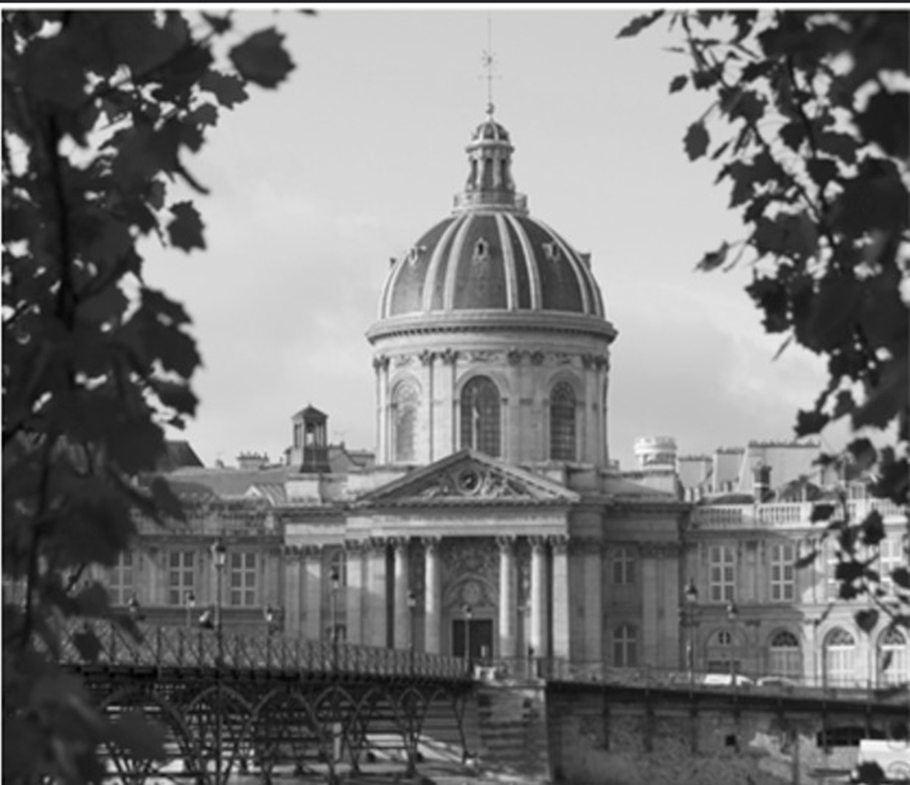
Figure 1: « L’institut de France » headquarter of its 5 academies. It was built in 1661 on the order of cardinal Mazarin, Italian prime minister during Louis XIV Infancy.
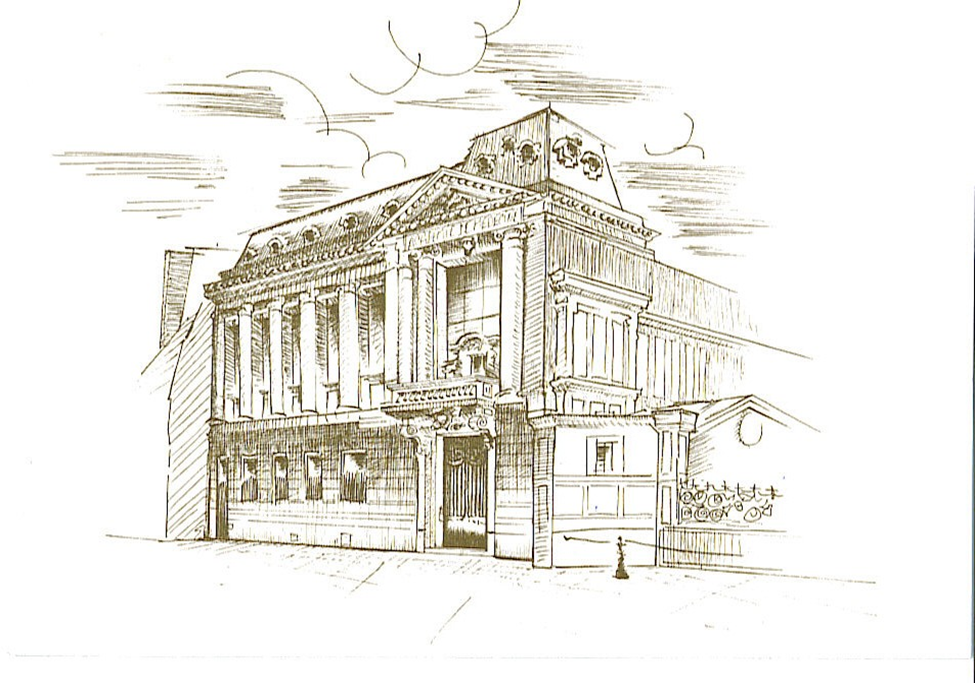
Figure 2: Facade of the National Academy of Medicine built in 1903.
Working in charities
In addition to the academies, there are numerous associations comprising both active and retired teachers. Here are just a few: medical associations helping people in developing countries (“Médecins sans frontières”; Doctors without border, “Médecins du Monde”; World Doctors, “Chaîne de l’Espoir”; Chain of the Hope...), French language learning associations, legal advice associations; all of which are aimed at underprivileged populations, both without financial resources and without education. Here too, doctors are reimbursed for their mission expenses (plane tickets, hotel, meals …)
Professional activities
After his/her retirement, a professor can still work outside the university in his/her area of expertise. For example, a professor of medicine can open an independent practice or find salaried work in a medical clinic and a professor of law can establish himself as a lawyer or be the legal advisor of a company. This is compatible with the simultaneous exercise of an unpaid activity in a charitable association or at university. In this case, there is no age limit, if not that of an advanced age.
Writing papers and books
Last but not least, many retired professors write books or papers in a variety of categories, journals, teaching books in their specialty to provide a working tool, books on medical history, and sometimes on events and politics, studies on society and death. The French Academy of Medicine boasts a number of them, some recently deceased, such as JD Vincent, author of the best-selling “Biology of Passions” [6] and Fémina Prize winner with his book on the French geographer and revolutionary Elisée Reclus. We should also mention Michel Huguier, author of both statistical books for students and researchers and of numerous history books, the latest of which is dedicated to Henri II, King of France, who drove the English out of Calais [7]. Their work is facilitated by the resources provided by the academy libraries, which are open to non-academics with the permission of the curator. Old books and documents whose protection must be ensured are now digitized and thus available.
Conclusion
Emeritus status remains for many former professors a position that brings many satisfactions: since life expectancy increases, the possibility of extending their activity in a field that they know and hope they will help it to progress, providing a service to their colleagues in activity and thus proving that they are still useful and, finally, being the memory of a past period, but which should not be forgotten because it is on the past that future knowledge is built. To finish, let us quote Alexis de Tocqueville, the famous author of “De la démocratie en Amérique” who wrote “Quand le passé n’éclaire plus l’avenir, l’esprit marche dans les ténèbres” (when the past no longer illuminates the future the mind walks in darkness).
References
- Robin JP (2022) Il est bien plus gratifiant d’être émérite qu’honoraire pour un retraité. Le Figaro. 5 janvier 2022.
- Décret n° 2021-1423 du 29 octobre 2021 relatif à l’éméritat des professeurs des universités et des maîtres de conférences. JORF N°0255, 31 octobre 2021 and Bull Eur Assoc Profs Emer, 1: 40-41.
- De Santo NG (2017) Créativité et découvertes scientifiques après 65 ans. Science, Art et Vieillesse Bull. Acad. Natle Méd, 201: 7-9, 1335-1347.
- Hall J G (2021) The Challenge of Developing and Evolving Career Pathways for Senior Academicians. Bull Eur Assoc Profs Emer: 12012.
- Les Académies dans l’Europe Humaniste : idéaux et pratiques : Actes du Colloque international de Paris, 10-13 juin 2003, Droz, septembre 2008, 704.
- Vincent JD (1986) La biologie des passions. Odile Jacob. Paris.
- Huguier M Henri II (2019) Catherine de Medicis, Diane de Poitiers et la renaissance. Editions Fiacre. Montceau-les-Meaux.
© by the Authors & Gavin Publishers. This is an Open Access Journal Article Published Under Attribution-Share Alike CC BY-SA: Creative Commons Attribution-Share Alike 4.0 International License. Read More About Open Access Policy.